Revealing LGBTQ+ history through Archives Hub

This blog post forms part of History Day, a day of online interactive events for students, researchers and history enthusiasts to explore library, museum, archive and history collections across the UK and beyond.

Use Archives Hub, a free resource provided by Jisc, to find unique sources for your research, both physical and digital. Search across over 3.4 million descriptions of archives, held at over 440 institutions and organisations across the UK.

People
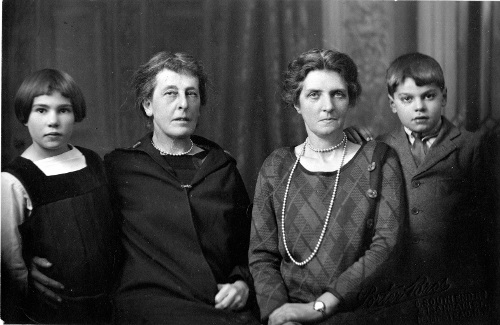
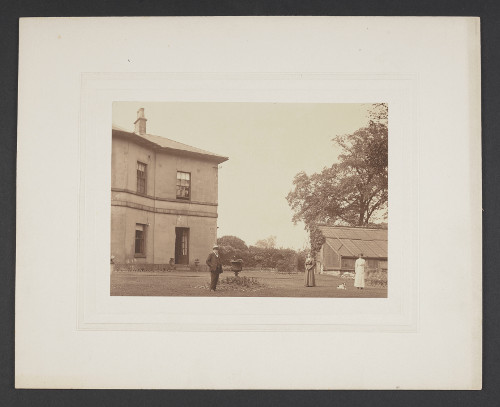
Yvette, Blackwood, Du Sautoy and Victor Dec 1926. Copyright the Royal College of Nursing 2018.
Yvette, Blackwood, Du Sautoy and Victor Dec 1926. Copyright the Royal College of Nursing, 2018. From the feature: Cathlin du Sautoy and Hermione Blackwood: personal papers at the Royal College of Nursing Archives.

Peter Tatchell Papers: Peter Tatchell was born in Melbourne, Australia in 1952. In 1972 he emigrated to Britain to avoid being drafted to the Vietnam War, which he had actively opposed. He worked freelance in design and display whilst studying for a BSc in Sociology at the Polytechnic of North London; 1974-1977. During this period, Tatchell attended meetings of the Gay Liberation Front (GLF) and soon became actively involved in gay politics. He acted as the GLF delegate to the World Youth Festival in East Berlin in 1973. Following his graduation in 1977, Tatchell became a social worker with the North Lambeth housing agency in Waterloo. In 1978 Tatchell founded the UK AIDS Vigil Organisation, the first group to campaign for the civil liberties of those with AIDS. This was followed in 1989 by his creation of the London Act Up (AIDS Coalition To Unleash Power). Outrage! was founded in May 1990 by Martin Corbitt, Simon Watney, Peter Tatchell and other gay rights activists. In 2000, Peter Tatchell stood unsuccessfully as an Independent candidate for the new Greater London Assembly. Held by Labour History Archive and Study Centre.

Feature: Cathlin du Sautoy and Hermione Blackwood: personal papers at the Royal College of Nursing Archives – Cathlin du Sautoy was born in 1875 to John and Annie du Sautoy. Her father was a civil engineer and the family lived in Yorkshire. After study of Domestic Science at Cardiff College she was appointed as lecturing sister at Tredegar House, the training school for nurses for the London Hospital, followed by training at Guy’s Hospital. A career in nursing and nurse teaching followed. Cathlin was deeply involved with nursing in France during and after the First World War, organising Red Cross units in the UK and in France, and helping to set up an English-style District Nurse programme in Reims after the end of the war. During the First World War, when she was in her late 30s, she met Lady Hermione Blackwood, who was a VAD in France. They would become lifelong companions, settling in the Vale of Health in Hampstead with their two adopted French children, Victor and Yvette, after the war. The couple acted as air-raid wardens during the Second World War and were active in the local area and hospital. Cathlin died in 1968, eight years after the death of Hermione. Collection held by Royal College of Nursing Archives.

Alan Turing Collection: Alan Turing (1912-1954) made two outstandingly original contributions to the development of computer science: his paper On Computable Numbers (1936) outlined a theoretical universal machine (or Turing machine), an idea which was more fully developed in his brilliant design for the Automatic Computing Engine (ACE), built after the Second World War at the National Physical Laboratory. He was also an important figure in the Colossus codebreaking operations at Bletchley Park during the War; made contributions to programming the Manchester University Mark I computer in the early 1950s; researched the subject of morphogenesis in plants at Manchester University; and from time to time explored the problem of machine intelligence. Held by University of Manchester Library

Tessa Boffin Archive: Tessa Boffin was born 24 December 1960. She was a lesbian photographer, writer, editor, and performance artist. Her work was at the front-line of international queer culture and politics. She initially studied photography in the mid 1980s at the Polytechnic of Central London, then undertook an MA in Critical Theory at the University of Sussex in 1987-1988. Her teaching was as a part time photography lecturer at the following institutions from 1986 to 1990: Adult Education, London; Oxford Polytechnic; West Surrey College of Art and Design; Polytechnic of Central London; Kent institute of Art and Design. Boffin’s work was sex and sexual fantasy, and explored lesbian, gay bisexual and transgender issues. She edited Ecstatic Antibodies in 1990 with Sunil Gupta, and co-curated the exhibition, which contributed to understanding of the role images played in the AIDS crisis, and in 1991 edited Stolen Glances: Lesbians Take Photographs, with Jean Fraser, which is contemporary lesbian photography. She was the first British lesbian doing political work around AIDS as early as 1985. Held by University for the Creative Arts Archives & Special Collections.

Noël Coward Collection: Noël Pierce Coward was born on 16 December 1899, the second of three sons of Arthur Sabin Coward, clerk, and Violet Agnes, daughter of Henry Gordon Veitch, captain and surveyor in the Royal Navy. His education was interrupted by his pursuit of a stage career, although he attended the Chapel Royal School in Clapham between 1908 and 1909. He also took lessons at Janet Thomas’ Dancing Academy in Hanover Square. He made his first professional stage appearance in 1911 in The Goldfish. Coward recorded some of his best-known songs between 1929 and 1936. However, his health was affected by his self-imposed workload, the pressures of public fame and his private life, and he had another psychological breakdown in 1926 and had to take an extended holiday to recover. He was in a relationship during the 1920s with John (Jack) C. Wilson, who had also become his manager, and had a series of brief affairs during the 1930s, but, at a time when homosexual relationships were illegal, had to be circumspect about this large area of his personal life. Held by University of Birmingham, Cadbury Research Library, Special Collections.

Papers of Vera (Jack) Holme: Vera Louise Holme (1881-1969) was born in Lancashire in 1881, the daughter of Richard Holme, a timber merchant, and his wife Mary Louisa Crowe. Holme was sent away from home as a young girl to be educated at a convent school in Belgium. As a young woman she was based in London, and began performing with touring acting companies, often as a male impersonator. She adopted a masculine style of dress, short hair and took on the nickname Jack or Jacko. She became a member of the D’Olyly Carte Opera company around 1906, performing in productions of Gilbert & Sullivan at the Savoy Opera House. She joined the Women’s Social & Political Union (WSPU) in 1908 and was active in suffrage propaganda work. The archive consists of diaries, correspondence, photographs and memorabilia relating to Holme’s activities as a suffragette; her work with the Women’s Volunteer Reserve and the Scottish Women’s Hospital Unit during the First World War; her visits to and relief work in Serbia / Yugoslavia; and her personal life and friendships. Many items across the collection relate to her girlfriend Evelina Haverfield. Held by the Women’s Library Archives.

Groups and campaigns

Activism cutouts on pink surface.
Photo by Polina on Pexels.

Stonewall: Stonewall was founded in 1989 by a small group of women and men who had been active in the struggle against Section 28 of the Local Government Act. Section 28 was an offensive piece of legislation designed to prevent the so-called ‘promotion’ of homosexuality in schools; as well as stigmatising lesbian, gay and bisexual people it also galvanised the LGBT community. The aim from the outset was to create a professional lobbying group that would prevent such attacks on lesbians, gay men and bisexual people from ever occurring again. Stonewall has subsequently put the case for equality on the mainstream political agenda by winning support within all the main political parties and now has offices in England, Scotland and Wales. Stonewall is renowned for its campaigning and lobbying. The collection comprises 66 boxes, posters and other loose items (1976-2016). Held by Bishopsgate Institute Special Collections and Archives.

Campaign for Homosexual Equality – Lancaster and Morecambe Branch: CHE evolved from the North-Western Homosexual Law Reform Committee, founded in 1963, and became a national organisation in 1969. It fights for: acceptance of homosexual and bisexual people by society as fully entitled to lead their lives openly; social and legal equality between all men and women; reform of laws which deny this equality; the eradication of the prejudice and hostility faced by the homosexual; the creation of social meeting places where homosexual men and women and heterosexual men and women may gather in a congenial atmosphere. The Lancaster and Morecambe branch of CHE was founded in 1975. 2 boxes of material, dated 1974-1996. Held by Lancashire Archives.

OutRage! Established in May 1990 after the murder of gay actor Michael Boothe, OutRage! was founded by Keith Alcorn (who came up with the name), Chris Woods, Simon Watney and Peter Tatchell (who drew up the first draft of what became the group’s Statement of Aims, and became one of its chief spokespersons throughout the next 20 years). According to its website, OutRage! is ‘a broad based group of queers committed to radical, non-violent direct action and civil disobedience to assert the dignity and human rights of queers; fight homophobia, discrimination and violence directed against [gays]; affirm [the] right to sexual freedom, choice and self-determination.’ OutRage! works to take up the cases of individuals suffering discrimination, provides information, advice and referrals, promotes awareness and education about lesbian and gay issues, and investigates and researches anti-gay discrimination. 15 boxes of material (1988-1999) held by Bishopsgate Institute Special Collections and Archives.

Records of St Andrews LGBT Society: 7 series consisting of minutes, administrative records, campaign materials relating to Section 28, factsheets and information booklets, newspaper cuttings and publicity including display relating to 1977 ‘Citizen-gate’ incident. The collection contains 1 box and 8 laminated posters, covering the period 1977-2010. Held by Glasgow Women’s Library.

Gay Medical Association: ‘GLADD: the Association of LGBT Doctors and Dentists’ had its roots in the Gay Medics and Dentals Group, a society of the University of London Students Union, established in 1976. The aims of the Gay Medics and Dentals Group was to support gay and lesbian clinical students in the University, and to promote the needs of homosexual patients to medical staff in London. One of their last actions, in December 1977, was to deliver a ‘Guide to counselling agencies for homosexual people in London’ to over 10,000 general practitioners and hospital specialists in London. The group was re-established in 1980 following the refusal of an advertisement by Scottish gay doctors in the British Medical Journal (BMJ). In 1983 the Society changed name to the Gay Medical Association (GMA) at which point they reported membership to be approximately 150 people. Around this time, GMA published its first leaflet ‘AIDS: Acquired Immune Deficiency Syndrome’. Possibly the first of its kind in the UK, the leaflet was left in clubs and pubs with the aim of educating gay men and lesbians about the disease. At time of deposit (2016) the organisation was known as ‘GLADD, the Association of LGBT Doctors and Dentists’. Held by Bishopsgate Institute Special Collections and Archives.

The Lesbian Archive: The Lesbian Archive and Information Centre (LAIC) was set up in London in 1984 to collect material about lesbian lives, activism and achievements, primarily in the UK. The Archive relocated to Glasgow Women’s Library in 1995. LAIC was established as The Lesbian Archives Collective in 1984, receiving grant funding from the Greater London Council. After the withdrawal of this funding, the collections were sent to the Glasgow Women’s Library. In 1996, LAIC accepted the archives and library of the Camden Lesbian Centre and Black Lesbian Group as a complete collection. Jackie Forster, broadcaster, comedian, lesbian activist and founder of Sappho magazine was an active member of the LAIC Management Committee from 1992 until her death in 1998. In 1997 a BBC film crew came to the archive to film Jackie for a programme about her life which was to be part of ‘The Day That Changed My Life’ series. Her work has made a huge impact on shaping the archive. You can hire this inspiring documentary on video from the Library. 5 metres of material, from 1984 to present. Held by Glasgow Women’s Library.

Research and publications
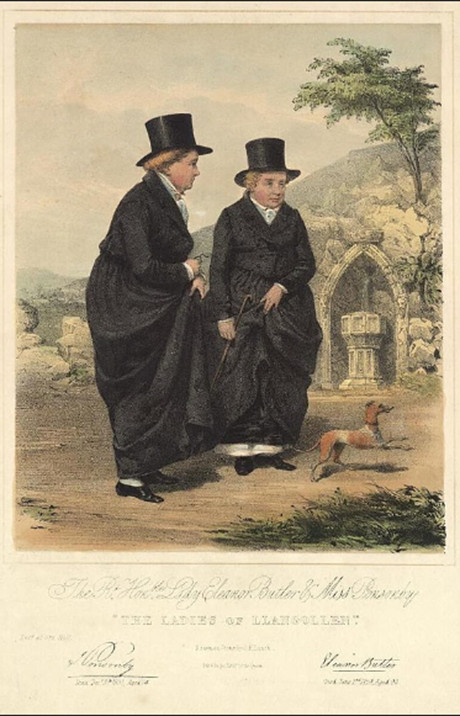
Illustration of two women in Victorian clothing.
James Henry Lynch: The Rt. Hon. Lady Eleanor Butler & Miss Ponsonby ‘The Ladies of Llangollen’. A portrait from the Welsh Portrait Collection at the National Library of Wales. Image in the public domain via Wikimedia Commons. From the feature Researching LGBTQ+ History at North East Wales Archives.

Queering the Quarantine Project: Queering the Quarantine was a project run by queer/disrupt, a research collective of students and early career researchers based at the University of Warwick who describe themselves as “a queer community based in the UK, giving space and voice to members of the LGBTQ+ family and marginalised groups both locally and worldwide.” Queering the Quarantine brought together a collection of creative responses to the experience of Covid-19 quarantine. The submissions were international in scope and include images, text, audio and audio visual pieces (dated 2020-2021). The collection consists of 213 digital files. Held by Modern Records Centre, University of Warwick.

Gay News Photographic Archive: Gay News was a fortnightly newspaper in the United Kingdom founded in June 1972 in a collaboration between former members of the Gay Liberation Front and members of the Campaign for Homosexual Equality (CHE). At the newspaper’s height, circulation was approximately 18,000 copies. Amongst Gay News’ early “Special Friends” were Graham Chapman of Monty Python’s Flying Circus, his partner David Sherlock, and Antony Grey, secretary of the UK Homosexual Law Reform Society from 1962 to 1970. Gay News was the response to a nationwide demand by lesbians and gay men for news of the burgeoning liberation movement. The paper played a pivotal role in the struggle for gay rights in the 1970s in the UK. The paper and it’s editors were often in the courts, being charged with obstruction (1972), obscenity (1974) and blasphemy (1976). Despite this, a successful campaign was launched by various gay groups to force WH Smith, who largely controlled newspaper distribution in the UK, to distribute and sell the paper. Gay News Ltd ceased trading on 15 April 1983. 37 folders of material (1972-1988). Held by Bishopsgate Institute Special Collections and Archives.

Two men in suits posing
Photo by Anna Shvets on Pexels.

Thesis, 2021: To What Extent Were Marinetti’s Conceptions of Masculinity in Line with the Definitions Employed by Futurist Women and Queer Italians: forming part of the University of Dundee’s History dissertations and theses collection (1969-2023), the thesis covers the topics: 20th century, Italy, gender, sexuality, futurism, Great War, identity. Held by University of Dundee Archive Services.

University of Birmingham Student (Alumni) Papers: Papers of Janet Batsleer: Janet Batsleer studied English at Cambridge and was a research student at the Centre for Contemporary Cultural Studies at the University of Birmingham. She worked as a youth and community worker before taking up a post as Lecturer in Youth and Community Work at Manchester Polytechnic in 1986. She has published on informal groupwork responses to young people who self-harm; on groupwork with South Asian women survivors of domestic violence; on arts-based practice with young men who are on the edge of the sex industry; as well as on lesbian, gay, queer and trans youth work. She has completed project evaluations with The Blue Room, on the place of creativity in responses to young men who sell sex, and with Groundwork UK on developing strategies to increase the diversity of groups with whom they engage, including offering resources to people with long-term mental health difficulties, lesbian and gay communities, and to small minority ethnic communities in predominantly white areas. Held by University of Birmingham, Cadbury Research Library, Special Collections.

Feature: Researching LGBTQ+ History at North East Wales Archives: shines the spotlight on some of the initiatives which are helping Wales to uncover the LGBTQ+ heritage held within their archives.

Lesbian and Gay News media Archive: Over 80,000 newspaper and journal cuttings from national and local press, 1930s-1990s, covering all aspects of gay life from the 1930s to the present time. The range of topics covered in the collection is very broad and includes arts and the media (film, television, theatre, literature, and entertainment), censorship and obscenity laws, counselling and sex education, employment, international and British lesbian and gay organisations, sexual law reform, trials, prisons, lesbian and gay politics, ‘the pink economy’, religion, transsexuals, transvestism, sex education, health and biographies. The collection is of prime interest to those studying visual culture and the influence of the media on public and private attitudes, but also to law students, twentieth century historians, psychologists and social scientists. The collection also includes a complete bound set of Gay News and its photograph collection, a nearly complete set of Gay Times, and a collection of banners (including those of OutRage!), badges, T-shirts and other artefacts. Held by Bishopsgate Institute Special Collections and Archives. Held by: Bishopsgate Institute Special Collections and Archives.

Online Resource: Independent Voices: Independent Voices is an open access digital collection of alternative press newspapers, magazines and journals, drawn from the special collections of participating libraries. These periodicals were produced by feminists, dissident GIs, campus radicals, Native Americans, anti-war activists, Black Power advocates, Hispanics, LGBT activists, the extreme right-wing press and alternative literary magazines during the latter half of the 20th century.

Events and more!

LGBT Flag
Photo by Alexander Grey on Pexels.

LGBTQ+ Celebration Event in Conwy: 11 digital images taken at Conwy’s LGBTQ+ History Month Celebration Event in 2023. The event was hosted by Conwy Museum’s Officer Rachel Evans and featured Norena Shopland who discussed the LGBTQ+ County Timeline Project; Anglican Priest Sarah Hildreth-Osborn who discussed her personal stories; these talks were followed by a performance of ‘Two Welshmen in Rome: The Story of John Gibson RA of Conwy’ by Jane Hoy and Helen Sandler of Queer Tales From Wales. Held by Gwasanaeth Archifau Conwy / Conwy Archive Service.

Civil Partnership Collection: In response to the change of legislation, which allowed gay and lesbian couples to form civil partnerships, The Women’s Library invited some of those lesbians who celebrated civil partnerships shortly after this was introduced to deposit material relating to the ceremonies. This collection (2003-2008) consists of items relating to Civil Partnership ceremonies in 2006: photographs, invitations, audio-visual recordings, celebration menus, registration forms, council registrar booklets. It also includes the participants’ answers to a questionnaire about their civil partnership. The documented ceremonies and celebrations include those held in Kent (on International Women’s Day, 2006); at Bromley Town Hall in Bow; in Hertfordshire and at the Liberal Jewish Synagogue, London. It also includes one folder of Civil Partnership ephemera. Held by Women’s Library Archives.

Pride Portraits, Carmarthen: A collection of portraits of members of the Carmarthen LGBTQ+ community. The images were captured by the Welsh photographer Mohamed Hassan in partnership with LocalMotion Carmarthen, during the local PRIDE events in 2024. The collection consists of 54 A4 printed portraits in a mix of colour and black and white. There are also an additional 249 images saved on a USB. LocalMotion Carmarthen comprises people from the third sector, arts and youth organisations and educational establishments. The goal is to create the happiest and most prosperous town in Wales, with creativity and culture at the root of improving people’s well-being and delivering a more equitable and inclusive economy for everyone. Mohamed Hassan is from Alexandria, but now lives and works in Pembrokeshire, Wales. Held by Archifau Sir Gaerfyrddin / Carmarthenshire Archives.

Lesbians and Gays Support the Miners (LGSM): Lesbians and Gays Support the Miners (LGSM): Lesbians and Gays Support the Miners (LGSM) originated from a collection made at the 1984 Pride March for the striking miners. Shortly afterwards a meeting was held at the University of London Union with speakers from the South Wales National Union of Miners (NUM), this led to the formation of LGSM. LGSM was a single-issue group, which sought to support the miners and their communities in their fight against Thatcherism. The organisation lasted only for the duration of the 1984-5 miners’ strike. A sub-group called Lesbians Against Pit Closures (LPAC) formed a few months after LGSM was established. This was partly because many women in the group felt intimidated by the gay men who formed the bulk of the membership. Both groups had strong links with the mining community of Dulais, South Wales. Exchange visits were arranged and benefits organised, the money collected went to support striking miners and their families. Held by Labour History Archive and Study Centre.

Previous History Day posts

Full steam ahead! Celebrating Railway 200 across the Archives

Autumn in the Archives!

Explore Science and Technology collections using Archives Hub

Discovering Environmental History collections using the Archives Hub

Exploring New Worlds in the Archives Hub

Cambridge contributor session and Archives fair 

During March, the Archives Hub team made a visit to Cambridge, to talk to some of our contributing archivists at Cambridge University and to attend an event! 

Cambridge archivists’ session 

We ran a session for some of our contributors and other archivists at Cambridge University. This session built on our previous online User Research sessions, but with a focused group from one institution. We asked for some answers on post it notes and large sheets of paper, as well as in a discussion group. 

Green trees, lawns and ornate stone building during on a sunny day.
King’s College chapel, Cambridge from Great St Mary’s church. Photo by Jean-Luc Benazet on Unsplash.

The session began with some questions about their archives, how the archivists feel about their work, their archive and their everyday challenges. Highlights mentioned included: 

  •  the range of work 
  •  helping researchers 
  • the work is very rewarding  

Common challenges included: 

  •  part time hours  
  • time constraints  
  • issues with uncatalogued materials.  

These answers indicate a common factor across the sector – resources are often an issue, but enjoyment is fuelled by day-to-day variety and interactions with researchers. When asked about their archive’s aspirations for the future, improving accessibility to the collections was heavily emphasised. Another positive featured in this section was the ability of the archivist teams to work well together, and to be able to advocate for their individual archives. 

Ornate stone building under blue sky during daytime.
St John’s College, Cambridge. Photo by Molly McTater on Unsplash.

Having established this background context, we looked at experiences of the archivists as users of Archives Hub. We first approached this by asking the archivists in attendance to finish some sentences. These focused on reasons for using the Hub, how they get to the Hub website and the most useful part of the Hub.  

The most common way of reaching the Hub was via search engine, with reasons for using the Hub including: 

  •  to improve accessibility to their collections as a contributing archive  
  •  to find individuals relevant to their college archive 

For the most useful part of the Hub, the search facility was the unanimous choice, as it allows a search of archives nationwide in one place. 

Following this, we turned to the idea of Archives Hub in practice. We asked how the archivist team use Archives Hub internally, in teaching and learning or their perceptions of the Hub. More than one of the archivists mentioned signposting to the Hub for solutions to more general enquiries. 

We also addressed issues facing Cambridge specifically, the main one being that there are multiple collections across the institution spread out across the different colleges. The archivists were keen to stress that the college archives are separate but interconnected, so being able to reflect that would be great. Using Archives Hub via ArchivesSpace (archive management application) will allow for multiple contributors to use one system, making it easier to contribute records via one harvesting method. This will also have a benefit for researchers highlighted by the archivists – the opportunity to search multiple college archives through one search! 

Cambridge Archives and Collections Fair 

Our trip to Cambridge also included co-hosting a stall during the Cambridge Archives and Collections Fair with the Library Hub team – talking to students, other stall holders and of course, more archivists. 

Four members of the Archives Hub team, seated behind an exhibition table.
Archives Hub team.

Archives of the different colleges are spread across the University of Cambridge campus. Archives Hub currently has 12 contributors from the University, and we will be onboarding 13 more when the ArchivesSpace project is live. This is an exciting opportunity to unite the archives in one place and improve the harvesting of their data to Archives Hub to boost discovery for researchers, members of the public and academics alike. 

Full steam ahead! Celebrating Railway 200 across the Archives

This blog post forms part of History Day North (at DCDC 2025), a day of online interactive events for students, researchers and history enthusiasts to explore library, museum, archive and history collections across the UK and beyond.

Use Archives Hub, a free resource provided by Jisc, to find unique sources for your research, both physical and digital. Search across over 3.3 million descriptions of archives, held at over 400 institutions and organisations across the UK.

Steam train travelling alongside green fields.
The Great Britain Steam Train. Photo by Christopher More on Pexels.

History Day North 2025 takes place in Durham, in the North-East of England, which is very fitting for our theme! Railway 200 celebrates rail history, beginning with a landmark journey that took place in the NE region:

on 27 September 1825, George Stephenson’s steam-powered Locomotion No. 1 travelled 26 miles between Shildon, Darlington and Stockton, carrying hundreds of passengers to great fanfare. It set in motion a train of events that changed the world forever.” Rail 200 timeline

So, we’re exploring a fascinating range of archives relating to railways, train travel and more – all board!

Yellow and blue poster advertising train travel.
Poster (1989): Isle of Wight by train / Needles and Sand Castle / Network SouthEast Designer: Edward Pond Printers: Planet Displays Ltd. Item forms part of the International Council of Graphic Design Associations (ICOGRADA) Archive at University of Brighton Design Archives.

Pioneers and Inventors

Collections of George Stephenson and Robert Stephenson (1790-1883): George Stephenson, the ‘Father of the Railways’, was an English civil engineer and mechanical engineer who built the first public inter-city railway line in the world to use steam locomotives, the Liverpool and Manchester Railway which opened in 1830. His son, Robert Stephenson, worked with him and also developed his own independent career in civil and mechanical engineering. His work took him to South America where he helped to develop infrastructure there. George Robert Stephenson, was George Stephenson’s nephew and also an engineer. Held by the Institution of Mechanical Engineers Archive.

Richard Badnall Papers (1832-1834): Badnall and his collaborator Richard Gill interested many prominent people, including George and Robert Stephenson and the Directors of the Liverpool and Manchester Railway, in his eccentric invention, ‘The Undulating Railway’. Comprises letters written to and by Richard Badnall, correspondence with the Patent Office including the original patent, and other documents relating to the invention. Held by University of Salford Archives & Special Collections.

Brunel Collection: Isambard Kingdom Brunel (1806-1859) papers: In 1833, Brunel was appointed Engineer for the Great Western Railway Company, where he carried into effect his plans for a broad gauge railway system. Despite the controversy of his decision, his work brought him great renown, and he was asked to design railways in Italy and to advise upon the construction of the Victorian Lines in Australia and the Eastern Bengal Railway. He worked on the system of atmospheric propulsion and attempted to use it on the South Devon railway in 1844, though it did not work in practice. Held by University of Bristol Special Collections.

Black and white photograph of a man in a top hat, standing in front of large metal chains.
Isambard Kingdom Brunel, image from The Big Ship from ‘Brunel University London’s special collections – Archives Hub Blog’ (2016 feature).

Thomas Edmondson Collection (1831-1988): in 1836, he became station master at Milton (now Brampton) station on the Newcastle and Carlisle Railway. Milton was not a busy station, and Edmondson had plenty of time to apply his craftsman’s training to the improvement of ticket issue. At the time, railway staff would fill out tickets by hand, which proved impractical once passenger numbers grew significantly. A more efficient method of creating tickets was required, which would also ensure that fraud was limited. Edmondson decided to create an automated system. The Edmondson ticket became universal; in the UK, it was endorsed by the Railway Clearing House set up in 1842 as a condition of its membership and by the end of the 1840s nearly all major companies had joined. Edmondson himself died in 1851, but his family continued to run the highly-profitable business. Edmondson tickets continued to be used in the UK into the 1980s and are still issued by some heritage lines. Held by University of Manchester Library.

Online Resource: IMechE Virtual Archive (c 1720-1985): you can access the story of the world’s first railway to rely exclusively on steam power – the Liverpool and Manchester Railway. Photographs reveal how the Bhore Ghat incline, India was constructed and show where workers lived. Artefacts include unique carved railway tokens used by George Stephenson to travel the railway lines he helped to build. Provided the by Institution of Mechanical Engineers Archive.

Railway Companies and Rail Magnates

Records of the Glasgow District Subway Co, Glasgow, Scotland (1894): Glasgow was the third city in the world to build an underground rail system, after London, England, and Budapest, Hungary. In August 1890, the Glasgow District Subway Co was given authority to build a 6.5 mile long route under the streets of Glasgow. The circular line is formed of parallel pair of tunnels built by tunnelling or cut and cover. The system uses an unusual gauge of 4 feet (about 1200mm), with the tunnels just 11 feet in diameter. The underground was opened on 14 December 1896, but a collision that day meant that the network did not open again until 21 January 1897. Held by University of Glasgow Archive Services.

United Railways of the Havana & Regla Warehouse Records (1871-1975): Records of the United Railways of the Havana & Regla Warehouses Ltd. This company, which went into voluntary liquidation in 1954 after the purchase of its property by the Cuban Government, incorporated a number of smaller Cuban railway enterprises. Records for these subsidiary companies are included in the collection: Cuban Central Railways Ltd, Havana Terminal Railroad Company, Mariano & Havana Railway Company Ltd, Matanzas Terminal Railway Company, Western Railway of Havana Ltd. Held by: University College London Archives.

Railways collection (1856-1987), forming part of the Oury Archive (1897-1977): The Oury Archive holds material related to the life and business activities of Libert Oury (1869-1939), specifically during his time as the London office director of the Mozambique Company, and his involvement in the development of the Port of Beira, the Trans-Zambezi Railway (TZR), and the lower Zambezi bridge. Additional material relates to the directorships and business interests inherited by his only son Vivian (1912-1988). Held by: Borthwick Institute for Archives, University of York.

Stations, Lines and Networks

Grey and red underground train.
London underground train, Photo by Dom J on Pexels.

Drawings of the Midland Railway Extension to London St Pancras (1867-1871): the collection comprises 33 architectural and engineering drawings as used or designed by contractors to the Midland Railway, covering architectural elements of St Pancras and Finchley Road Stations, various bridges and approaches and the design and emplacement of working equipment such as cranes and traversers. It represents a very small part of what must have been a much more extensive set of drawings. Held by: National Railway Museum Archive.

Online Resource: Rail Map Online (circa 1750 – to date): a free website that provides interactive maps of past and present to explore UK and Ireland railways, US West railroads and UK and Irish canals and more. There are options for exploring via layers (such as narrow guage, Metro, historic tramways), legend (companies) and places (stations). The resource also features a range of tools, including ability to select which coordinate system to display positions with.

Jonathan Backhouse & Company, Darlington (1774-1896): Jonathan Backhouse died in 1826, leaving the business to his sons. The eldest, another Jonathan (1779-1842), is remembered best for his involvement in the pioneering Stockton and Darlington Railway. He argued in favour of a railway during a public meeting at Darlington town hall in 1818, stressing its commercial advantages over those of the conventional option, a canal. The first track was laid in May 1821, and the completed railway opened on 27th September 1825. Jonathan served as the company’s first treasurer until 1833. Held by: Barclays Group Archives.

Railway Image Collection (1904-1930): Edward Alan Chard was chief locomotive draughtsman Eastleigh Works, British Railways, Southern Region. He was an avid collection of railway items. 29 series of postcards and some drawings of British and international locomotives. Held by: Institution of Mechanical Engineers Archive.

Mumbles Railway Records (1804-1959): The Swansea and Mumbles railway ran from Swansea to Mumbles. In 1804 the Oystermouth Railway and Tramroad Company was incorporated and work began on building the line. In 1806 goods traffic began to pass over the line in waggons pulled by horses. The main cargo was limestone at this stage. However, as Mumbles began to lose its industrial character and started to develop as a tourist resort, freight lessened and in 1807 the line became unique as providing the first regular rail passenger service in the world. Held by: Swansea University Archives.

Bridges and Tunnels

Large red railway bridge spanning a grey river.
Forth Bridge, Edinburgh, Scotland, Great Britain. Photo by Keith Proven on Pexels.

Records of P & W MacLellan Ltd, steel stockholders, Glasgow, Scotland (1626-1989): In 1878 the whole of Glasgow was shaken by the collapse of the City of Glasgow Bank, with whom P & W MacLellan had an account. Fortunately, orders began to pick up again in 1879 with Indian State Railways ordering 48 bridges and William Arrol & Co, a Glasgow bridge builder, placing an order for 12,000 tons of steel for the Forth Railway Bridge, Scotland. The Forth Bridge contract however was cancelled when a storm hit and destroyed the Tay Bridge, Scotland. The demand for railway bridges was not greatly dented by the Tay Bridge disaster and in February 1880 the South Indian Railways ordered a further 48. It was also in this year that Walter MacLellan purchased the Carntyne Iron Co, Glasgow, in order to ensure a steady supply of iron. In 1883, the firm won the contract to supply the approaches for a completely redesigned Forth Bridge. Held by: University of Glasgow Archive Services.

Photograph: “Woodhead Railway Tunnel, west” (Derbyshire, 1991), item forms part of the Richard Hills Collection. Held by the Mills Archive.

Channel Tunnel Association archive (1802-2002). The collection covers the history of tunnels under the Channel (172 boxes, material in English and French). Held by: Brunel University London Special Collections.

Large sample of chalk, stored in plastic display container.
Chalk, Channel Tunnel Archive – from ‘Brunel University London’s special collections‘ (2016 feature).

Beachley – Aust Ferry and Severn Rail Tunnel Timetables and Correspondence: The Beachley – Aust Ferry provided a crossing over the River Severn between South Wales and England from Beachley and Aust, Gloucestershire. From 1931 the ferry was run by Old Passage Severn Ferry Company Ltd. The ferry service was replaced by the Severn Bridge in 1966. The construction of the Severn Rail Tunnel began in 1873 and the tunnel was opened in 1886. Timetables of Beachley – Aust Ferry and trains ferrying cars through the Severn Tunnel with correspondence, 1966. Held by Gwent Archives / Archifau Gwent.

Red brick manor house with garden and lawn in foreground.
Harlaxton Manor’s Railway Tunnel.

The “railway tunnel” at Harlaxton Manor was built at the same time as the north wing of the house (completed 1845-1850). The tunnel is on two levels meeting the north wing at the 2nd and 3rd floors. The presence of coal dust in the service shafts provides witness that the tunnel was in use for some time and in the 1937 Contents Sales Catalogue Lot 855 describes a railway coal trolley 4ft. 6ins. by 3ft. by 3ft. 6in. high. What seems to be unique about the service tunnel at Harlaxton is that it joins the house at high level, using gravity to deliver the goods rather than the use of expensive and time consuming hoisting equipment to haul goods up to the higher level. The tunnels are also home to several species of bats, with surveys of hibernating bats carried out annually, in January and February, by the Lincolnshire Bat Group. During the hibernation season (November to March) visitors are not allowed to enter the tunnels. The folder of material forms part of the collection ‘Harlaxton Manor Gardens, Conservatory, Walled Garden and Railway Tunnel‘ (1838 to present), held by Harlaxton Manor Archives.

Souvenir of the inauguration of the railway bridge over the South Channel of the River Niger by H.E. Sir Frederick Lugard at Jebba, Nigeria, West Africa (1916): Album containing general views of the bridge at Jebba, photographs taken during the opening and of the wreck of the ‘Dayspring’ which sank in 1857. Railway construction started in earnest in Nigeria in 1893 with the building of the Lagos Railway running north from Lagos to Ibadan. In 1907 work was started by the Northern Nigeria Administration on the Baro-Kano line which was completed in 1911. The Lagos line was then extended northwards to join the Baro-Kano line at Minna, but until the completion of the bridge at Jebba, trains still had to be ferried across the Niger. The opening of the bridge by Sir Frederick Lugard on January 31 1916 finally connected Lagos and Kano on a direct line of 705 miles. Held by: Royal Commonwealth Society Library.

Passengers and Journeys

Blue train running beside green field.
Photo by Jalitha Hewage on Pexels.

Travel Journal of Rev. John Warner: a detailed travel journal from 1890, compiled by Rev. John Warner (1860-1933), describing a voyage aboard the SS. City of Chicago from Liverpool to New York, and a subsequent tour of the north-eastern United States and Canada, encompassing Dayton (Ohio), Buffalo, Niagara Falls, Toronto, Montreal, Lake Champlain, Saratoga Springs, etc., between May and November 1890. The journal is an important source for nineteenth-century American studies, offering a perceptive visitor’s comments on the condition of the north-eastern United States and Canada during a period of rapid industrial, economic, social development. The journal is also valuable for studies of trans-Atlantic passenger shipping and the railways of the U.S. and Canada. Held by: University of Manchester Library.

The Records of the Traveller’s Aid Society (1885-1939): The Travellers’ Aid Society was initiated in 1885 by the Young Women’s Christian Association to aid female passengers arriving at ports and railway stations, where they were met by accredited station workers who reported to the Travellers Aid Society Committee. Held by: Women’s Library Archives.

The diaries of Thomas Sopwith (1803-1879), mining engineer, land surveyor and philanthropist in the north-east of England, cover the period 1828-1879. The collection includes both the original diaries, and a copy of the material held on 16 reels of microfilm. They form a meticulous account of the professional life of Sopwith, detailing his work, projects and his travels both for business and for enjoyment. The diaries also include sketches and illustrations of people, views, and buildings and often include descriptions of lectures and conversations with people Sopwith met on his travels. A particularly notable aspect of the diaries is Sopwith’s descriptions of journeys he made by rail, often along newly-opened railway lines in a period where rail travel was in its early stages. Held by Newcastle University Special Collections and Archives.

Blue and red poster advertising train travel.
Poster (1989): Southend by train / Regatta / Old Leigh / Network SouthEast Designer: Edward Pond Printers: Planet Displays Ltd. Item forms part of the International Council of Graphic Design Associations (ICOGRADA) Archive at University of Brighton Design Archives.

Railway staff and Accidents

Black and white photograph of steam train that has crashed through the exterior wall of a railway station to the street one level below, surrounded by damaged masonry and debris.
The Montparnasse derailment, 22 October 1895. The Granville–Paris Express overran the buffer stop at its Gare Montparnasse terminus. Photo by Pixabay on Pexels.

Papers relating to the railway and railway safety, including correspondence and note (1837-1843): forms part of the The notebooks and other papers of Sir George Cayley collection (1780-1957) held by National Aerospace Library.

Railway Accidents Book (1922-1930): The London, Midland and Scottish Railway Co.Ltd. was created in 1923 from a merger of several railway companies, most notably the London and North Western Railway and the Midland Railway. The LMS was the largest of the four UK railway companies created under the terms of the Railways Act 1921, and it was the second biggest employer in the UK after the General Post Office. The LMS also claimed to be the largest joint-stock company in the World. A volume containing records of accidents to LMS employees during the period 1923-1930. Accident returns were required under the terms of the Factories Acts, and each report provides details of the employee, the nature of the accident and its consequences, the date and time of the accident, and a decision on the category of accident (misadventure, negligence by injured party or other party, and “other cause” – nearly all cases were judged to be misadventure). Held by University of Manchester Library.

National Union of Railwaymen (1894-1992): The collection, 87 volumes and 14 boxes, comprises 5 series: proceedings and reports, 1894-1987; Executive Committee minutes, 1966-1992; other papers; Branch papers including Norwich, Stockport district and Manchester. Held by: Working Class Movement Library.

International Transport Workers’ Federation: Reports on Africa, 1952-1975: The International Transport Workers’ Federation was founded in London in 1886 by European seafarers and dockers’ union leaders who realised the need to organize internationally against strike breakers. In 2001 it is a Federation of 570 trade unions in 132 countries, representing around 5 million workers. The ITF represents transport workers at world level and promotes their interests through global campaigning and solidarity. It is dedicated to the advancement of independent and democratic trade unionism, and to the defence of fundamental human and trade union rights. It is opposed to any form of totalitarianism, aggression and discrimination. Held by: Institute of Commonwealth Studies Library, University of London.

Associated Society of Locomotive Engineers and Firemen (ASLEF) 1861-2018: The Engine Drivers’ and Firemen’s United Society was founded in 1865 and claimed a membership of over 10,000 by 1866 when they made initial demands for a 10 hour day and payment of overtime as well as an increase in pay. With the establishment of the ASRS in 1872, there was some dilution of membership but the ASRS was regarded as too conciliatory and eventually the demand for a more militant and focused union led to the Associated Society of Locomotive Engineers and Firemen which was formed in Leeds in February 1880. Held by: Modern Records Centre, University of Warwick.

Engines and Industry

Red and black painted metal train name plate.
Charles Rennie Mackintosh nameplate and crest from class 47 locomotive, inaugurated 1982, ScotRail Ltd. The item forms part of the Art, Design and Architecture collection at the Glasgow School of Art Archives and Collections.

Photograph: Steam Engine “Lady of the Lake” at Crewe: The London and North Western Railway (LNWR) 7 ft 6 in Single 2-2-2 class was a type of express passenger locomotive designed by John Ramsbottom. The class is better known as the Problem class for the first locomotive built, or the Lady of the Lake class for the example that was displayed at the International Exhibition of 1862. The first examples were built shortly after the acquisition of the Chester and Holyhead Railway by the LNWR, and primarily saw use on the Irish Mail route from London to Holyhead. They were the first locomotives to be fitted with water scoops, which could refill the tender from water troughs between the tracks without stopping. Item (photograph) held by: Archifau Ynys Môn / Anglesey Archives.

Dinorwic Quarry Records (1809-1970): Slate quarrying at Dinorwig, Caernarfonshire, dates back to the 18th century. In 1787, Thomas Assheton-Smith (1752-1828) of the Faenol estate, leased his workings to the Dinorwig Slate Company, a partnership of two solicitors, Ellis and Wright, and Mr Bridges, a merchant. By 1809, only Wright remained, but he was joined by Hugh Jones, a Dolgellau banker, and Assheton-Smith himself. In 1824, the Dinorwig Tramway was opened, and the Padarn Tramway in 1843, allowing greater amounts of slate to be transported to Port Dinorwic on the Menai Strait. Railways to Porth Penrhyn and Y Felinheli, Caernarfonshire, were completed by 1852. Held by: Gwynedd Archives Service – Caernarfon Record Office / Gwasanaeth Archifau Gwynedd, Archifdy Caernarfon.

William Jack Collection: William Jack worked for the Chatterley Whitfield Colliery Ltd, 1928-1957. His family connections with the Chatterley firm go back to 1870. Jack wrote a history of the colliery, History of Chatterley Whitfield Railways. William Jack photographed and also collected photographs of North Staffordshire collieries, railways and mineral workings. Held by: Keele University Archives and Special Collections.

Fiction and Film

Steam train crossing a high viaduct in the Scottish Highlands.
Train with smoke, [Highlands] Photo by Gabriela Palai on Pexels.

The Railway Children: Production photographs from The Railway Children by E. Nesbit which was performed at the York Theatre Royal from 17th August-16th September 1989. Also photographs taken at the North Yorkshire Railway, Pickering. Also a letter regarding acquisition of props from the Vintage Carriages Trust. Forms part of the collection Post-1945 York Theatre Royal Archive. Held by: York St John University Archives and Special Collections.

Papers of Brian Tinley Shepherd Simpson (1936-1963): Brian Tinley Shepherd Simpson (1912-1997), was a priest of the Scottish Episcopal Church, and was Canon of St John’s Cathedral, Oban 1978-80. He retired in 1980, thereafter being Honorary Canon of Oban Cathedral until his death on 10 February 1997. The collection comprises his voluminous correspondence, and wealth of material, including photographs and correspondence with the Rev. W. Awdry, author of Thomas the Tank Engine stories, relating to his passionate interest in railway transport. Held by: University of St Andrews Special Collections.

‘Orient Express’ (1991-2007), part of the Gavin Mark Stamp Archive: Gavin Mark Stamp (1948-2017) was a British architectural historian, writer, journalist, and campaigner. Stamp presented a number of television programmes for Channel 5, including a five-part architectural travel series ‘Gavin Stamp’s Orient Express‘, in which he travelled by train from London, via Vienna to Istanbul. The show examines art and architecture alongside the cities’ historical and political contexts, to present how the history of Eastern Europe is told through its buildings. WagTV produced the series with Steven Green as Director, and Eliya Aman as Producer. The series was filmed between 12 Jun-15 Jul 2006, and aired on Channel 5 in 2007. Held by: Paul Mellon Centre for Studies in British Art.

Photographs from Alfred Hitchcock’s film The Lady Vanishes, starring Michael Redgrave and Margaret Lockwood (1938): 1 folder of material, part of the Sir Michael Redgrave Archive. (1890-1996). Michael Redgrave was born on 20 March 1908, the child of actors Margaret (Daisy) Scudamore and Roy Redgrave. He studied at Cambridge University before becoming a teacher of modern languages at Cranleigh School, Surrey, where he spent much of his time directing and acting in amateur dramatic productions. His professional acting career began at the Liverpool Playhouse in 1934, where he met and married actress Rachel Kempson. Redgrave moved into films in 1938, starring in Hitchcock’s The Lady Vanishes. Held by V&A Theatre and Performance Collections.

More train-related collections!

The Great Train Robbery, 1963: material consists of manuscripts, typescripts, correspondence, press cuttings and list of banknotes recovered. Forms part of the Lord Edmund-Davies Papers (1908-1992) reflecting his career as a barrister and High Court judge, including papers deriving from court cases in which he was involved, 1936-1983; including the Great Train Robbery and the Aberfan Disaster Tribunal, 1966-1967, 1974. Held by: National Library of Wales / Llyfrgell Genedlaethol Cymru.

Curve of a railway tunnel in the darkness with beam of bright green light, reflected off rails and walls.
Timelapse Photography of Tunnel. Photo by Pixabay on Pexels.

Records of the Railtrack Private Shareholders Action Group (RPSAG, 2001-2006): RPSAG was formed at a meeting of Railtrack shareholders on 19 October 2001. The RPSAG website stated that the mission of the group was to ‘obtain a fair and just settlement for the 255, 000 private shareholders of Railtrack who lost millions when their company was forced into administration by the government’. Railtrack was a group of companies that owned track, signalling, tunnels, bridges, level crossings and stations that made up the British Railway System. It was placed into railway administration under the Railways Act 1993 on 7 October 2001 following an application to the High Court by the then Transport Secretary Stephen Byers. Held by National Railway Museum Archive.

Explore Science and Technology collections using Archives Hub

This blog post forms part of History Day 2022, a day of online interactive events for students, researchers and history enthusiasts to explore library, museum, archive and history collections across the UK and beyond. History Day is part of the Being Human festival, the UK’s national festival of the humanities, taking place 10–19 November 2022.

Use Archives Hub, a free resource, to find unique sources for your research, both physical and digital. Search across descriptions of archives, held at over 380 institutions and organisations across the UK.

This year’s History Day is themed ‘Human Discovery: Experiencing Science’, so we’re highlighting a range of archive collections relating to inventions, technology, medical advances and more.

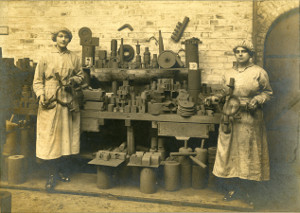
Photograph of women factory workers during WW1. Image copyright Institution of Mechanical Engineers.

Press photograph of women factory workers during WW1. Image copyright © Institution of Mechanical Engineers.

Feature: Engineering and innovation during the First World War (October 2014).

Inventions and inventors

John Logie Baird papers (1906-2009). Baird was born in Helensburgh and studied electrical engineering at the Glasgow and West of Scotland Technical College, then attended Glasgow University. After becoming apprenticed with Argyll Motors and then to working with other firms, from 1916 he engaged in various private business ventures in Glasgow, London and the West Indies. In 1922 he began to experiment with transmitting and receiving visual signals. In 1924 his efforts were rewarded by a flickering image on his screen. A public demonstration was given at Selfridge’s Oxford Street store in April 1925 and showed the transmission of crude outlines of simple objects. The world’s first demonstration of television followed on 26 January 1926 at the Royal Institution, London. In May 1927 the first demonstration of television between London and Glasgow took place, and in February of the following year the first transatlantic television broadcast was successfully carried out. On 30 September 1929 the BBC made its first television broadcast using the Baird 30-line system. Material held by University of Strathclyde Archives and Special Collections – see full collection description.

Papers of Marjorie Jean Oswald Kennedy (19th-20th century). Marjorie hailed from the Kennedy family of Kilmarnock which included Thomas Kennedy c1796-1874, founder of Glenfield & Kennedy (producers of valves) and inventor of the world’s first water meter. During the Second World War, Kennedy served with the Women’s Royal Naval Service (WRNS), 1942-1945. She was stationed at HMS Pembroke III, the WRNS training depot at Mill Hill in 1942, then at HMS Beaver, Hull, from 1942 to 1943, at HMS Drake, Devonport, in 1943, and then at HMS Pembroke III again and HMS Pembroke V, Bletchley Park, between 1943 and 1945. At Bletchley Park Kennedy was working with the team of allied codebreakers who were able to decrypt a vast number of messages that had been enciphered using the German’s Enigma machine. The intelligence gleaned from this source, codenamed ‘Ultra’ by the British, had been a substantial aid to the Allied war effort. Material held by Edinburgh University Library Special Collections – see full collection description.

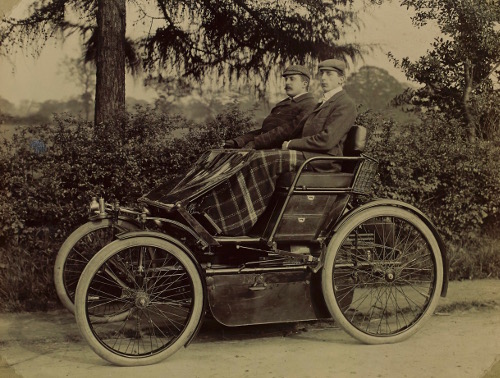
Frederick Lanchester at the wheel of the 8 h.p. two cylinder Lanchester known as the ‘Gold Medal Phaeton’ with his brother George as passenger. c1899. Coventry University [reference no. LAN/1/16/4].

Photograph copyright © Coventry University.


Feature: The Frederick Lanchester archive at Coventry University (December 2018):
The work of car manufacturer, engineer, scientist and inventor Frederick Lanchester (1868-1946) is being celebrated by the Lanchester Interactive Archive project at Coventry University. He was one of the UK’s leading automobile engineers of the late 19th and early 20th centuries and creator in 1895 of the first all-British four-wheel petrol driven motor car.

Records, publications and artefacts relating to James Watt (1705-1990): Watt was born at Greenock in 1736. He trained as an instrument maker in London and began to practise this trade in Glasgow. Watt soon developed a reputation as a high quality engineer and was employed on the Forth & Clyde Canal and the Caledonian Canal. In 1763 he repaired the model of Newcomen’s steam engine belonging to Glasgow University, and began experiments on properties of steam. Watt improved on the engine’s design and took out a patent for the separate condenser in 1769. He later adapted the engine to rotary motion, making it suitable for a variety of industrial purposes, and invented the flywheel and the governor. In 1774 he went into partnership with Matthew Boulton to make steam engines at their works at Soho, Birmingham. The first engines were used in collieries and iron works and were the driving force behind the transformation of cotton spinning from a cottage to factory industry. Watt’s inventive talents led him to patent a variety of machines and devices including a letter-copier and a smoke-consuming furnace. Material held by Heriot-Watt University Museum and Archive – see full collection description.

Technology

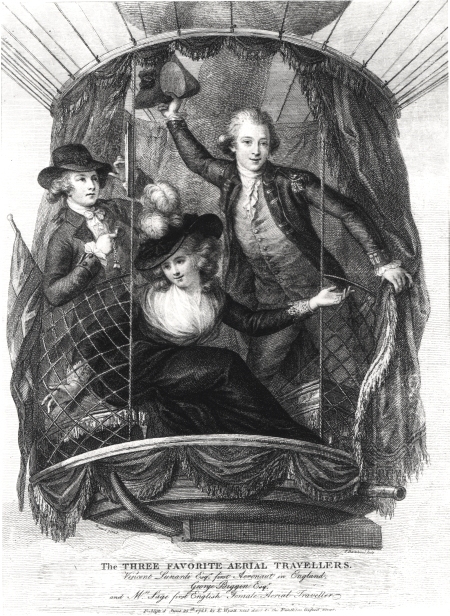
Lithograph of George Biggin, Letitia Sage and Vincenzo Lunardi ascending from St George’s Fields, London, 29 June 1785. Image copyright © National Aerospace Library.

Feature: Planes, pilots and politics: National Aerospace Library’s collections fly onto Archives Hub (April 2020).

Private Telegraph Companies (1846-1899): The development of the telegraph system in the United Kingdom closely followed the growth of the railways with telegraph offices often being located at stations. The Government allowed the network to develop under private ownership and did not intervene significantly in its running. This was in sharp contrast to the telegraph system on the Continent which had been under state ownership since its inception. By 1868 there were five major telegraph companies operating the inland network, all of which were open to criticism regarding errors, delays and high prices. Frank Ives Scudamore campaigned on behalf of the Post Office for them to be nationalised citing how unfavourably they compared with those on the Continent. Despite protestations from the companies a series of Acts of Parliament were passed and the inland telegraph system came under control of the Post Office in 1870. Material held by British Telecom Archives – see full collection description.

Online Resource: Developing LEO: The world’s first business computer. Reports, memoranda, photographs and other documents from the archives of the statistician John Simmons (1902-1985), including key material on the development of the pioneering LEO computers by J. Lyons & Company Ltd. during the 1940s and 1950s. Provided by Modern Records Centre, University of Warwick.

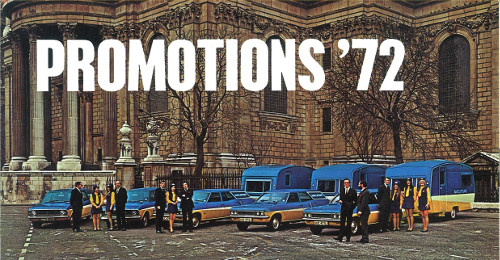
Barclaycard 1972 promotions. Photograph copyright © Barclays Group Archives.

Feature: Barclaycard: 50 years of plastic money – the story from the Archives (June 2016).

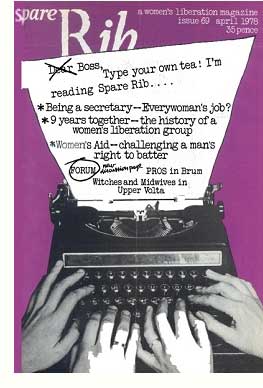
Illustration: Spare Rib, April 1978, photo copyright © The Women’s Library.

Feature: Typewriters and Office Machines

Online Resource: Hiroshima Archive – the Hiroshima Archive is a pluralistic digital archive using the digital earth to display in a multi-layered way all the materials gained from such sources as the Hiroshima Peace Memorial Museum, the Hiroshima Jogakuin Gaines Association, and the Hachioji Hibakusha (A-bomb Survivors) Association. Beyond time and space, the user can get a panoramic view over Hiroshima to browse survivors’ accounts, photos, maps, and other materials as of 1945, together with aerial photos, 3D topographical data, and building models as of 2010. The archive aims to promote multifaceted and comprehensive understanding of the reality of atomic bombing. Stories of Atomic bomb survivors living across Japan. Around 170 testimonies and around 150 photographs can be browsed.

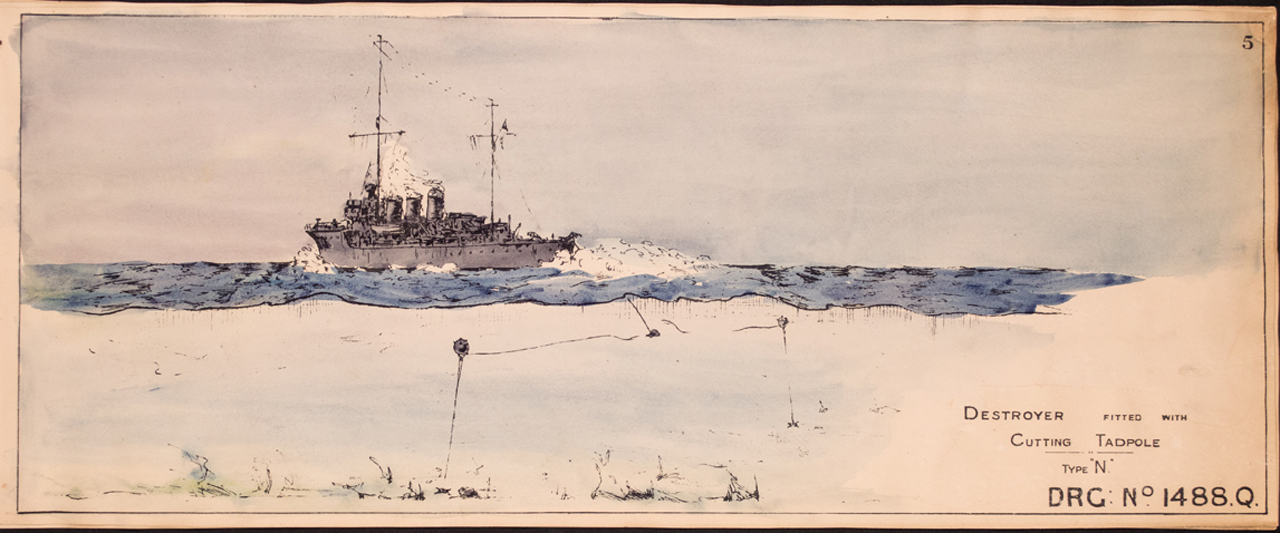
Destroyer fitted with a type ‘N’ paravane. Image copyright © Institution of Mechanical Engineers. Feature: Engineering and innovation during the First World War (October 2014).

Medical Advances

Papers of the Dorset House School of Occupational Therapy (1919-2005): Dorset House, the first School of Occupational Therapy in England, was established by its visionary Medical Director, Dr Elizabeth Casson, in the latter part of the 1920s. Over the years the School has moved from its original base in Bristol to Bromsgrove, and finally to Oxford, firstly in Nissen Huts in the grounds of the Churchill Hospital and then to London Road in 1964. In 1992 Dorset House School of Occupational Therapy became part of Oxford Polytechnic, which, later that year, was conferred with university status and was named Oxford Brookes University. Material held by Oxford Brookes University Special Collections and Archives – full collection description.

Elizabeth Casson, aged 21. Image copyright © Oxford Brookes University Special Collections and Archives. Feature: The Dorset House Archive (December 2019).

John Charnley/William Waugh Collection (1922-1989): John Charnley, orthopaedic surgeon, born in 1911, was educated at the Medical School of the Victoria University of Manchester. In 1937, he took up his first post as a resident surgical officer at Salford Royal Hospital, and demonstrated an early talent for making and developing specialist apparatus and equipment. He first encountered work in orthopaedics and fractures in 1939 as resident casualty officer at the Manchester Royal Infirmary. During the Second World War, Charnley worked at an Orthopaedic Centre near Cairo, applying to become an orthopaedic specialist in 1942. Charnley returned to Manchester in 1946 at the Manchester Royal Infirmary as an honorary assistant orthopaedic surgeon and lecturer in orthopaedic surgery, and later as a consultant. In 1949, Charnley became a visiting orthopaedic surgeon at Wrightington Hospital. He began to work on the mobility of the hip in painful hip conditions due to arthritis. His discoveries in this field were made possible by his outstanding ability in engineering, and in working with materials. In 1961, Charnley established the Centre for Hip Surgery at Wrightington Hospital, where he pioneered and developed prostheses for hip replacement surgery, and studied the acceptance of artificial materials within bone and joint tissues. The hip replacement operation is now one of the most common operations performed in the UK. Material held by University of Manchester Library – full collection description.

Online Resource: London’s Pulse: Medical Officer of Health Reports 1848-1972. This collection features digitised reports of the UK Medical Officers of Health for the London area during the 19th and 20th centuries. These reports were compiled on an annual basis and include written information and statistical data on public health issues, such as infectious diseases, mortality rates, health services and environmental impacts on health. Selected reports are available from the period and the areas covered include the present City of London, the current 32 London boroughs and the predecessor local authorities for these areas. The reports also highlight the differences between different Medical Officers of Health and show how individual personality influenced their work and reporting style. Provided by the Wellcome Library.

Papers of Martindale, Louisa (1872-1966): Louisa Martindale was born in 1872 and studied at the London School of Medicine for Women and in Vienna, Berlin and Freiburg, obtaining her M.D. in London in 1906. She practised in Brighton and was founder of the New Sussex Hospital here in 1918, where she was Senior Honorary Surgeon. In 1921 she moved to London as a Consultant Surgeon and was Honorary Surgeon to the Marie Curie Hospital at Hampstead. During a visit to New York in 1919 she was a moving force behind the foundation of the Medical Women’s Federation and in 1931 she was elected President of that body. Martindale was a pioneer in the treatment of uterine cancer and fibroid growths in women through deep X-ray therapy. She died in 1966. Material held by the Wellcome Collection – full collection description.

HD/1/81: The minute book of the founders of the hospital, discussing the principles of kind treatment and moral management, dated 1842-1848. Image copyright © Archifau Sir Ddinbych / Denbighshire Archives.

Feature: Unlocking the Asylum: Cataloguing the North Wales Hospital Archive (August 2019).

Northern Ireland Hospitals Authority Archive (1948-1974): The collection consists of reports and monographs on the location, construction and administration of hospitals in Northern Ireland covering the period 1948 to 1974. Items include reports from The Northern Ireland Hospitals Authority, Hospital Management Committees, research organisations and central government. The archive constitutes the nucleus of the Northern Ireland Hospitals Authority library which passed to The Queen’s University of Belfast at the Authority’s demise in 1973. Queens University Medical Library continues to maintain an archive of material related to health and social services provision in Northern Ireland. Material held by Queen’s University Belfast Special Collections & Archives – full collection description.

One of our first attempts at archiving the RCN COVID-19 webpages using our digital archive. Image copyright © Royal College of Nursing Archives.

Feature: Creating a COVID-19 archive at the Royal College of Nursing (November 2020).

Florence Nightingale letters (1882-1883): Florence Nightingale, (1820-1910), nursing pioneer and reformer, is regarded as the founder of modern nursing. Born in Florence, Italy, she dedicated her life to the care of the sick and war wounded. In 1844, she began to visit hospitals; in 1850, she spent some time with the nursing Sisters of St. Vincent de Paul in Alexandria and a year later studied at the institute for Protestant deaconesses in Kaiserswerth, Germany. In 1854, she organized a unit of 38 nurses for service in the Crimean War. In 1860, she established the Nightingale School for nurse training at St. Thomas’s Hospital, London and in 1907 became the first woman to be given the British Order of Merit. This collection contains letters from Florence Nightingale to William Rathbone the MP for Caernarfonshire, concerning public health issues and the typhoid epidemic at Bangor in 1882. Material held by Archifdy Prifysgol Bangor / Bangor University Archives – full collection description.

Find out more

Follow us on Twitter @archiveshub and on Facebook

Join our mailing list: to receive updates about what is on the Hub and tips for using archives in your research, please visit our jiscmail list to sign up.

How to search the Archives Hub: https://archiveshub.jisc.ac.uk/using/.

Read more features

Explore more Online Resources

Bringing Archives to Life – On Point: Royal Academy of Dance at 100

Archives Hub feature for December 2021

On Point: Royal Academy of Dance at 100 is a free display, mounted in collaboration with the Victoria and Albert Museum (V&A) in London, to celebrate the centenary of the Royal Academy of Dance (RAD) which was founded in 1920 with the aim of improving the standards of dance teaching in the UK. The display uses a wide range of material from both the RAD and the V&A archive collections, some of which are listed on the Archives Hub website, to explore the RAD’s story from its foundation to its influence on ballet and dance internationally.

On Point: Royal Academy of Dance at 100 in the Theatre and Performance Galleries at the V&A Museum, London. Photo © V&A

The display occupies three rooms in the V&A’s Theatre and Performance galleries, and each space includes original costumes, designs, drawings, artefacts, and documents, as well as film footage and many photographic images. It’s a largely chronological arrangement with the first room focusing on the founders of the RAD, the context in which the organisation was founded, and its early development.  

In 1912, Philip Richardson (editor of the Dancing Times magazine) met the dancer, choreographer and teacher, Edouard Espinosa, at the Arabian Nights Ball in Covent Garden. The two men became friends and found common purpose in campaigning to improve the state of dance and dance teaching in in the UK. It was Richardson who essentially cherry-picked the five founders who agreed to form the first committee in 1920. Their international backgrounds represented the principal schools of ballet training (French, Italian, and Russian) and together they pooled their knowledge to produce a syllabus that would provide the foundation for a new British standard.

Adeline Genée, Phyllis Bedells, and Tamara Karsavina were among the greatest ballerinas of the early 20th century and committed to the RAD for the remainder of their lives. Lucia Cormani and Edouard Espinosa combined the roles of performers, choreographers, and teachers from early in their careers and were only involved with the RAD during its first decade. Their connections with the professional ballet scene were an important factor in shaping its work, its initial influence, and continuing development. Although the organisation was primarily concerned with teaching, the founders were also keen to promote the talents of young British dancers and provided many opportunities for performance.

Adeline Genée with young RAD scholars in 1932.

Genée agreed to become the first President of the RAD and was instrumental in securing the patronage of Queen Mary in 1928 and the Royal Charter in 1935. Following the end of the Second World War, she turned her attention to getting ballet recognised as an educational subject to be taught in schools alongside the sister arts of music, drama, and painting. The second room explores the heart of the RAD’s business in teacher training and syllabus development more fully. We also introduce Margot Fonteyn who succeeded Adeline Genée as President of the RAD in 1954.

Costume design by Philip Prowse for Margot Fonteyn in Paquita, 1964.
Margot Fonteyn and Rudolf Nureyev at a rehearsal for the 1963 Gala Matinée performance. Photo by GBL Wilson, © RAD/ArenaPAL

One of the highlights of Fonteyn’s presidency was the series of gala matinées she organised between 1958 and 1965. These performances showcased artists, companies and repertoire that had not been seen in London before, including the first appearance of Rudolf Nureyev in 1961. The galas proved to be an enormous success and provided the foundation for the legendary Fonteyn and Nureyev partnership. There were also opportunities for RAD scholars to perform in the programmes alongside the professional artists. The display includes a selection of materials relating to the galas – set and costume designs, photographs and programmes, alongside a beautiful costume from the romantic ballet Les Sylphides, which Fonteyn danced many times throughout her career. 

Another highlight in Room 2 is some previously unseen film footage of Fonteyn presenting the primary grade of the children’s syllabus which she devised in 1968. Filmed in 1972 by her brother Felix, it shows how involved she was with the work of the RAD, and was only recently discovered in the archives. 

The final room focuses on the current and future RAD with photographic representations of recent initiatives such as Silver Swans – dance classes for older learners of any ability, and Project B – a campaign aimed to encourage more boys into dance.  Well-established events such as the Genée International Ballet Competition (now renamed ‘The Fonteyn’) are also included here with the original Adeline Genée Gold Medal (first awarded in 1931) being displayed alongside more recent rehearsal footage and photographic images from across the years.

Madonna Benjamin, winner of the Adeline Genée gold medal in 1979. Photo by Jennie Walton.

The presidents of the RAD are brought up to date with costumes worn by Antoinette Sibley (president from 1991 – 2012) and Darcey Bussell (president from 2012 to current) displayed alongside a tunic worn by Nureyev as Prince Siegfried in Act 3 of Swan Lake. The succession of legendary ballerinas who have assumed the role of president shows the strong connection that has always existed between the RAD and the ballet profession.

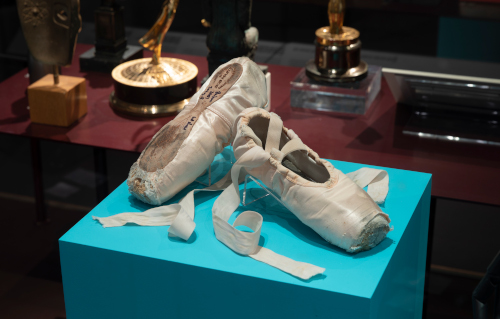
Shoes worn by Darcey Bussell at her farewell performance with the Royal Ballet, 8 June 2007. Photo © V&A

Visitors to the display are also encouraged to have a go for themselves! A ballet barre area has been installed with screens showing some simple exercises from the current RAD Graded Examinations syllabus to follow along.

100 years later, the RAD is now a truly global organisation, inspiring people and communities everywhere to enjoy the benefits and joys of dance – something of which its founders would rightly be proud.

On Point: Royal Academy of Dance at 100 is on now until Monday 29th August 2022 at the V&A Museum, London (admission free).

Eleanor Fitzpatrick
Archives and Records Manager
Royal Academy of Dance

Related

Adeline Genée Archive Collection, c. 1890-1970

Phyllis Bedells Archive Collection, c. 1906-1985

Browse all Royal Academy of Dance Archives on the Archives Hub

Browse all V&A Theatre and Performance Collections on the Archives Hub

Previous features on Royal Academy of Dance Archives collections

The Association of Performing Arts Collections

A Spring in Your Step

All images copyright. Reproduced with the kind permission of the copyright holders.

Discovering Environmental History collections using the Archives Hub

This blog post forms part of History Day 2021, a day of online interactive events for students, researchers and history enthusiasts to explore library, museum, archive and history collections across the UK and beyond.

Use the Archives Hub, a free resource, to find unique sources for your research, both physical and digital. Search across descriptions of archives, held at over 370 institutions across the UK.

This year’s History Day is themed ‘environmental history‘, so we’re showcasing a range of archive collections relating to nature, landscape, climate change and more.

Nature

Yorkshire Wildlife Trust Archive, 1933 onwards: The Trust was established in 1946 to receive the gift of two plots of land at Askham Bog, York. The land had been purchased in 1944 by prominent confectioners and keen naturalists Sir Francis Terry and Arnold Stephenson Rowntree, following the earlier unsuccessful attempt of the Joseph Rowntree Village Trust to acquire the site at auction. Today, the Trust is one of a national partnership of 47 Wildlife Trusts across the whole of the UK, the Isle of Man and Alderney, and cares for over 100 nature reserves throughout Yorkshire. Held by the Borthwick Institute for Archives, University of York – see full collection description.

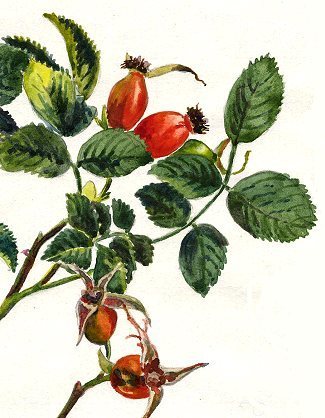
“Wild Rose haups. Rosa Canina. Sidlaw Road, Strathmartine. September 1912”. Detail from Illustrations of Scottish Flora (1912-1913) by David R Robinson. From the Kinnear Collection, reference GB 0254 MS 103/3/5. Photograph copyright © University of Dundee Archive Services.

Feature: Botany – botany and botanists (March 2005).

Ida Margaret Hayward Collection: Ida was born in 1872 to a family very much connected to the cloth industry. After her father died, she and her mother went to live near her mother’s family in Galashiels in the Scottish Borders where her uncles owned the woollen mills of Messrs. Sanderson. It was noticed by one of her uncles, William Sanderson, that many of the seeds brought in with the wool imported from Australia, New Zealand and South America survived the treatment process and went on to germinate on the banks of the Tweed. Encouraged by him, Hayward set about conducting a thorough study of this alien flora. She jointly published “The Adventive Flora of Tweedside” in 1919. Ida was elected a Fellow of the Linnean Society in 1910 and the Botanical Society of Edinburgh in 1913. Before her death in 1949, she donated her herbarium of adventive (alien) plants to the Royal Botanic Garden Edinburgh, along with her scrapbook and letters relating to the Flora. Held by Royal Botanic Garden Edinburgh Archives – see full collection description.

Online Resource: Historical UK Tide Gauge Data (19th and 20th Century): this collection offers registered users the chance to search UK sea level records, including some of the UK’s earliest recorded sea level data from Sheerness – a port on the Isle of Sheppey in Kent. Records available include several large datasets of tide gauge charts and ledgers from around the UK. Resource is provided by the British Oceanographic Data Centre:
https://archiveshub.jisc.ac.uk/data/gbah5-historicaluktidegaugedata.

Stopes (Marie) Papers: Marie Stopes was educated in Edinburgh and London. She obtained a first class honours degree and was a gold medallist at University College London. She studied for her Ph.D. in Munich. Marie was the first woman to be appointed to the science staff of the University of Manchester in 1904. She went to Japan on a Scientific Mission in 1907, spent a year and a half at the Imperial University, Tokyo, and explored the country for fossils. She specialised in coal mines and fossil plants. She founded, jointly with H. V. Roe, the Mothers’ Clinic for Constructive Birth-Control, 1921 (the first birth control clinic in the world). Marie was President of the Society for Constructive Birth Control and Racial Progress. She was also Fellow and sometime Lecturer in Palaeobotany at University College London and Lecturer in Palaeobotany at the University of Manchester. She published many books, mainly concerning botany and birth control. Material held by University College London Archives – see full collection description.

Image of butterflies: courtesy Museum of Natural History, University of Oxford.

Feature: Insects and Entomologists, enthusiasts and biologists, entomologists and zoologists (March 2006).

“Fringilla Carduelis. The Goldfinch”, from the Bird Book. Image courtesy of the University of Exeter Library Special Collections.

Feature: Ornithology, scientists, enthusiasts, and illustrators (May 2003).

Landscape

Papers of Sir Robert Hunter, Solicitor and Co-founder of the National Trust: Robert Hunter was in South London in 1844. He took his degree at University College, London. In 1867 he was appointed solicitor for the Commons Preservation Society and was instrumental in the preservation of Wimbledon Commons and Epping Forest among other open spaces. In 1876 he wrote a competition essay for the Commons and Footpaths Preservation Society on the means of preserving common lands for the enjoyment of the public. This was chosen as one of six to be published. In 1882 he became Chief Solicitor to the Post Office but continued to advise the Commons Preservation Society. In 1894 he was knighted for services to the open space movement. Coupled with the work of Canon Hardwicke Rawnsley in the Lake District, Hunter’s influence led to the foundation of the National Trust for Places of Historic Interest or Natural Beauty. Material held by Surrey History Centre – see full collection description.

Papers of Sir Charles Lyell (1797-1875): influential geologist, fellow of the Royal Society; these papers include notes on the New Zealand earthquake of 1856. Charles Lyell was born at Kinnordy, near Kirriemuir in Angus, in 1797. During his lifetime he wrote many geological papers, mainly published by the Geological Society of London, however his reputation rests almost entirely on his work Principles of Geology. In this work, Lyell propounded his theory of uniformitarianism, which holds that the Earth’s history is explained by gradual change over time, and that geological processes going on today (like erosion) have occurred in the past and have shaped the Earth’s surface, and this had a strong influence on Charles Darwin. In 1828 he explored the volcanic region of the Auvergne, then went to Mount Etna to gather supporting evidence for the theory of geology he would expound in his Principles of Geology. The collection is held by Edinburgh University Library Special Collections – see full collection description.

Cartouche from Moore’s Mapp of the Great Levell of the Fenns re-printed in 1706 [R59/31/40/13/1]. Image copyright: Cambridgeshire Archives.

Feature: Silt, sluices and smelt fishing – The Eau Brink Cut and the Bedford Level Corporation Archive (July 2018).

Climate change

G.S. Callendar Archive, 1930-2003: In the first half of the twentieth century, the carbon dioxide theory of climate change had fallen out of favour with climatologists. Beginning in 1938, Guy Stewart Callendar (1898-1964), a noted steam engineer and amateur meteorologist, revived this theory by arguing that rising global temperatures and increased coal burning were closely linked. Working from his home in West Sussex, England, Callendar collected weather data from frontier stations around the world, formulated a coherent theory of infrared absorption by trace gases, and demonstrated that the carbon dioxide content of the atmosphere, like the temperature, was indeed rising. Although he was an amateur meteorologist, Callendar worked on a truly global scale, compiling a reliable world data set of surface temperatures from earliest times and insisting – long before it became fashionable to do so – that climatology must deal with physics and atmospheric dynamics. Just before the beginning of the International Geophysical Year in 1957, Hans Seuss and Roger Revelle referred to the ‘Callendar effect’ – defined as climatic change brought about by anthropogenic increases in the concentration of atmospheric carbon dioxide, primarily through the processes of combustion. Collection held by the University of East Anglia Archives – see full collection description.

Guy Stewart Callendar (1898-1964)
Photo courtesy of the G.S. Callendar Archive, University of East Anglia.

Feature: Seeing the light: G.S. Callendar and carbon dioxide theory of climate change (November 2007).

Records of the Geological Society of Glasgow, learned society (1858 onwards): The Geological Society of Glasgow was founded in 1858. The Society aims to gain an understanding of the study of the earth through excursions and lectures, and is still active to this day. The Society’s early contribution to geological research includes, fossils, an understanding of Scotland’s glacial history, geological time and the relationship between climate change and the Earth’s rotation. Famous 19th and early 20th Century Presidents include Lord Kelvin (for 21 years), Sir Archibald Geikie, Charles Lapworth, Ben Peach and Walter Gregory. Material is held by the University of Glasgow Archive Services – see full collection description.

Research Papers relating to the Global Environment Facility (1990-2002): The Global Environment Facility (GEF) is an international financial instrument situated within the World Bank. Establishment of the GEF took place just prior to the 1992 Rio Earth Summit (also known as the United Nations Conference on Environment and Development or UNCED) held 3-14 June 1992. It also resulted in three legally binding agreements known collectively as The Rio Convention: Convention on Biological Diversity; Framework Convention on Climate Change (UNFCCC); United Nations Convention to Combat Desertification. Compliance to agreements was ensured with the establishment of the Commission on Sustainable Development (CSD), the GEF was to be the financial mechanism for these conventions, and the work of the GEF was informed by the outcomes of the Rio Earth Summit. The GEF’s main areas of work focus on biodiversity, climate change, chemicals & waste, land degradation, international waters, sustainable management of forest and REDD+. The body’s work also cuts across food security, sustainable cities, commodities, public private partnerships, capacity development, the small grants programme, gender mainstreaming, small island developing states, and indigenous peoples. The collection is held by Hull University Archives, Hull History Centre – see full collection description.

Other collections related to Environmental History

Environment Agency Collection, 1786-2010: The Environmental Agency is an executive Non-departmental Public Body responsible to the Secretary of State for Environment, Food and Rural Affairs and a Welsh Government Sponsored Body responsible to the Minister for Environment and Sustainable Development. The collection consists of reports, surveys, data records, maps, administrative records and other material relating to the work of the Environment Agency (and of its predecessor organisations the various River Boards, River Authorities, Water Authorities and the National Rivers Authority). While a few documents date back to the 19th century and earlier, the majority spans the 1930s to the 1990s. Material held by Freshwater Biological Association Archives – see full collection description.

“Yellow water-lily. Pools in Camperdown Woods. Nuphar lutea (Nymphæaceaæ) July 19, 1913”. Detail from Illustrations of Scottish Flora (1912-1913) by David R Robinson. From the Kinnear Collection, reference GB 0254 MS 103/3/5. Photograph copyright © University of Dundee Archive Services.

Feature: Botany – botany and botanists (March 2005).

Dee and Clwyd River Authority records (1653-1979) 1544 items. In 1965, the Dee and Clwyd River Authority was constituted, superseding the numerous earlier authorities concerned with the navigation of the Dee Estuary and the drainage of low-lying coastal and estuarial land. The construction of a navigable cut from Chester to Connah’s Quay had been empowered by an Act of 1732, to replace the old deep-water channel to the north of the estuary, and in 1740 the River Dee Company was created to maintain the navigation. The Dee Conservancy Act 1889 established the Dee Conservancy Board, taking over the Company’s functions. In 1938, the Conservancy Board officially came to an end. Material held by North East Wales Archives – Flintshire / Archifau Gogledd Ddwyrain Cymru – Sir y Fflint – see full collection description.

Online Resource: Freeze Frame. The collection will be of interest to anyone studying or teaching the arts as examples of landscape, portrait and historical photography. There are images related to the environment, wildlife and travel. Themes such as ‘History of Photography in the Polar Regions’, Changing Britain and the Heroic Age’ and ‘Surviving in Extreme Environments’ can all be explored within this collection. The resource includes 20,000 images, biographies, photographs, still images and text. Provided by Scott Polar Research Institute, University of Cambridge: https://archiveshub.jisc.ac.uk/data/gbah17-freezeframe.

Meteorological Office Archive (Mid-19th Century – 2010): as a result of the Brussels Conference of Maritime Nations in 1853 and following consultations by the Board of Trade with the Royal Society, a Meteorological Department was formed at the beginning of August 1854 for the collection and co-ordination of meteorological observations made at sea. The National Meteorological Archive is the official UK Place of Deposit for meteorological records. It is home to one of the most comprehensive collections on meteorology anywhere in the world and provides a major resource for scientific and historical research of international scope. Their aim is to support the Met Office and the wider scientific community by providing a targeted, proactive and flexible information service; their primary role is to preserve the public memory of the weather and to conserve the records in their care. The collection comprises around 500,000 meteorological records stored across four large, environmentally controlled strongrooms. See full collection description.

Online Resource: GB3D Type Fossils (Lower, Middle and Upper Palaeolithic; Early Neolithic). This collection currently holds examples of macrofossil types found in the UK, and will develop in future to include examples from collections based around the world. The study of fossils provides insight into the Earth’s history, how creatures evolved, continents separated and environments changed across vast periods of time. Fossil types available to view in the database include ammonites, belemnites, fish, corals and trilobites. Institutions who have contributed to the database include the Sedgwick Museum, Oxford University, National Museum of Wales, Geological Curator’ Group and the collection’s publishers – British Geological Survey: https://archiveshub.jisc.ac.uk/data/gbah2-h2-gb3dtypefossils.

Chameleon: photograph of vivarium in The Manchester Museum, copyright © The University of Manchester.

Feature: Charles Darwin and Evolution (February 2009).

Find out more

Follow us on Twitter @archiveshub and on Facebook

Join our mailing list: to receive updates about what is on the Hub and tips for using archives in your research, please visit our jiscmail list to sign up.

Information on how to search the Archives Hub: https://archiveshub.jisc.ac.uk/using/.

User Survey 2021: whether you’re a new user or have used the Archives Hub for years, we’d really appreciate your feedback to help us develop the service!
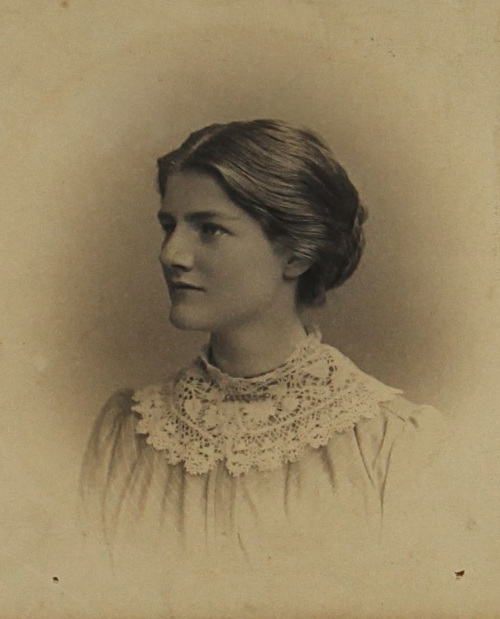
If you use the Archives Hub for work / study, please complete our quick survey at https://jisc.onlinesurveys.ac.uk/ahw21
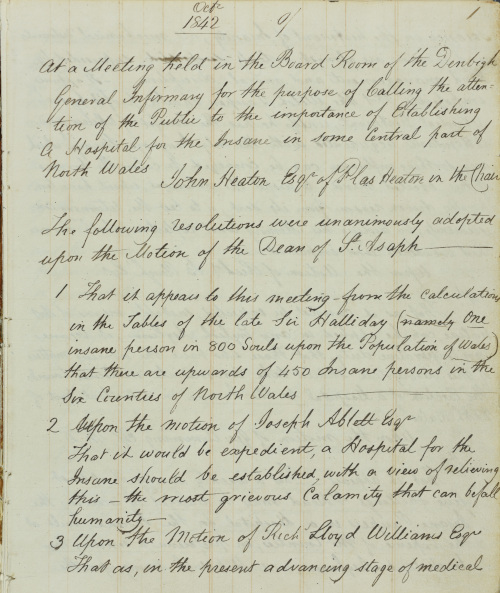
Or if you use the Hub for personal research, please go to https://jisc.onlinesurveys.ac.uk/ahp21

Thank you for your time. Your feedback is much appreciated!

Exploring New Worlds in the Archives Hub
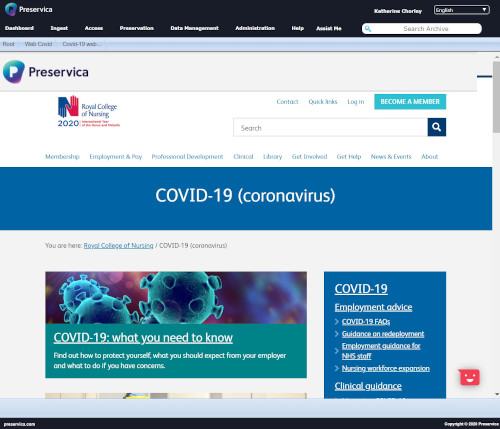
This blog post forms part of History Day 2020, a day of online interactive events for students, researchers and history enthusiasts to explore library, museum, archive and history collections across the UK and beyond.

Use the Archives Hub, a free resource, to find unique sources for your research, both physical and digital. Search across descriptions of archives, held at over 350 institutions across the UK.

History Day 2020 coincides with the Being Human festival, the UK’s national festival of the humanities. Their theme this year is ‘New Worlds’, so taking this as our inspiration, we’re highlighting a range of archive collections – across Travel, Exploration, Space Exploration and Science Fiction.

Travel

Austen Henry Layard’s passport (1) (LAY/1/4/8)
Austen Henry Layard’s passport (1) (LAY/1/4/8). Image copyright: University of Newcastle.

Unearthing Family Treasures: The Layard and Blenkinsopp Coulson Archives
In 1839 a young lawyer left behind his London office for a post in the Ceylon (now Sri Lanka) Civil Service, thus beginning a series of travels, adventures and discoveries which would result in him achieving world renown for uncovering and shining a light on the ancient civilizations of Mesopotamia, in particularly Assyrian culture. That young man was Austen Henry Layard. Read the feature, by University of Newcastle Special Collections.

Papers of Elizabeth Thomson, 1847-1918, teacher, missionary, traveller and suffragette, c1914
Throughout the 1890s and 1900s Thomson travelled the world with her sister, Agnes, working as teachers and missionaries. The countries they visited include India, Japan, the USA, Germany and Italy. In the summer of 1899 Thomson reports that she visited Faizabad in India to learn Urdu but could not stand the heat and left for Almora in 1902. In 1907 she sailed to Bombay to complete missionary work, before teaching English in Sangor for the winter. In 1909 she travelled back to the UK, via Vienna, Prague, Dresden and Berlin, to settle in Edinburgh. Material held by University of Glasgow Archive Services – see the full collection description.

Steel engraving, 1875. © Image is in the public domain.

Sentimental Journey: a focus on travel in the archives
The hundreds of collections relating to travel featured in the Archives Hub shed light on multiple aspects of travel, from royalty to the working classes, and encompassing touring, business, exploration and research, the work of missionaries and nomadic cultures. Read the feature.
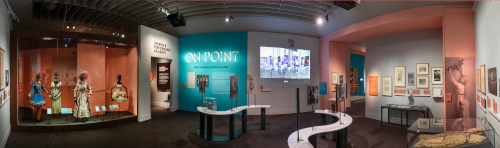
An abstract of a voyage from England to the Mediteranian: the diary of an anonymous English naval victualler, 1694-1696
Contains the log of an anonymous English naval victualler on a voyage from Gravesend in England to Cadiz in the Mediterranean between 31 December 1694 and 29 October 1696. Material is in English Spanish Latin Hebrew. Written in a single neat late seventeenth-century English hand with the text on each page set within faint ruled lines. There are many tables, diagrams, and quite finely-drawn illustrations of places en route, especially in Spain, and interesting objects, such as keys and seals. Material held by University of Leeds Special Collections – see the full collection description.

Bodiwan Papers, 1634-1923
The papers of Michael D. Jones and his family, which include numerous letters to Michael D. Jones from the Welsh settlers in Patagonia or relating to them, prior to the sailing of the Mimosa and after. Amongst them is a letter from Charles de Gaulle, the eminent Breton and Celticist, expressing his interest in the scheme to found a Welsh colony in Patagonia. Also, amongst the correspondents are L. Patagonia Humphreys, Rev. D. Lloyd Jones, Rhuthun and Mihangel ap Iwan and Llwyd ap Iwan. The papers reflect the hardship suffered by the new settlers as well as the investment made by Michael D. Jones in the venture. There are bills and receipts relating to the Mimosa, share certificates, statistics regarding population for 1879. Also, a bank pass book of the Welsh Colonising and General Trading Company Ltd, 1870-1883, and a register of the Welsh applicants to Patagonia, 1875-1876. The collection is held by Archifdy Prifysgol Bangor / Bangor University Archives – see the full collection description.

The London to Istanbul European Highway
Part of The National Motor Museum Trust Motoring Archive‘s Bradley Collection, including striking illustrations by Margaret Bradley. Read the feature.

The handsome blue car, by Margaret Bradley. ‘With apologies…this being a rough sketch…made somewhere in the middle of no mild channel’. Sketch by Margaret Bradley, copyright the National Motor Museum Trust.

Exploration

Cambridge Svalbard Exploration Collection, 1933-1992
The collection documents many decades of scientific work undertaken by (mostly) Cambridge researchers from 1938 until the early 1990s. These were mostly led by Walter Brian Harland (1917-2003), who also became the collator of the materials collected in Spitsbergen. The documentary archive complements the physical collection of geological specimens collected during those expeditions. Svalbard is located in the north-western corner of the Barents Shelf 650km north of Norway, and is named after the Dutch Captain, Barents, who is credited with the modern discovery of the islands in 1596 and after whom the Barents Sea is named. Collection held by Sedgwick Museum of Earth Sciences, University of Cambridge – see the full collection description.

Online Resource: Old Maps Online – provided by Great Britain Historical GIS Project, Maps Online is a search portal that combines the historical map collections of several organisations around the world. Users can search across collections through a single interface and easily locate multiple maps of a geographical area. The interface is free and access is open to all users. A wide range of different types of map are available, including: land maps; sea charts; boundary and estate maps; military and political maps; and town plans. Historical maps of many countries are available – including South and Central America from the 16th to the 20th centuries; Britain and particularly London, up to 1860; North America in the 18th and 19th centuries; pre-1900 Dutch Maps; the North West of England; and Moscow. More details.

Challenger Expedition Photographs, 1870s-1885; 1981-1983
HMS Challenger set out to collect specimens from different depths of water across the globe. The voyage took place between 1872 and 1876. It is thought that this was the first expedition to routinely use photography to document the journey. There was a darkroom on board so photographs could be developed on the ship. Material held by National Museums Scotland – see the full collection description.

Shackleton’s Endurance Expedition Centenary
27th October 1915: Antarctic expedition ship Endurance was abandoned on the orders of Sir Ernest Shackleton and their expedition became fight for survival. Read the feature by the Scott Polar Research Institute, University of Cambridge.

Space Exploration

John Herschel’s photograph of his father’s 40-foot telescope.
Herschel’s 40-foot telescope, circular glass plate photograph. The telescope’s wooden scaffolding is seen here on 9 September 1839, at Observatory House in Slough, England. It was photographed by the astronomer John Herschel (1792-1871) before its demolition. The telescope was designed by John’s father, the German-born British astronomer William Herschel (1738-1822). The tube was 40 feet (12 metres) long. The first observations with this telescope were carried out 50 years earlier on 28 August 1789, when two new moons of Saturn (Enceladus and Mimas) were discovered. 50 years later, by 1839, John Herschel and W H Fox Talbot had invented the process we now know as photography. This is one of the earliest surviving glass plate photographs. Image copyright: Royal Astronomical Society Archives

Russian Space Exploration, 1903
Drawings, documents, photographs, ephemeral objects and memorabilia relating to early Russian space exploration. Objects include domestic items such as cigarette cases, ashtrays, cigarette ornamental dispensers, desk thermometers, ornamental lamps and tea glass holders. Included in the collection are photo albums and a press cutting album made by a school child as well as stamp collections. The collection boasts rare drawings by Konstantin Tsiolkovsky in which he envisaged the exit from a spacecraft into the vacuum of space as well as a drawing of a Reactive engine (Rocket engine); one of the first designs of its kind from c.1930. The collection is held by De Montfort University Archives and Special Collections – see the full collection description.

Jodrell Bank Observatory Archive, c.1924-1993
The Jodrell Bank Observatory is one of the world’s largest radio-telescope facilities. Originally known as the Jodrell Bank Experimental Station, it was renamed the Nuffield Radio Astronomy Laboratories in 1966, and changed to its current name in 1999. The first radar transmitter and receiver was installed by Bernard Lovell, then working as a physicist at the University of Manchester, at Jodrell Bank, Cheshire, in December 1945 (the University campus had proved unsuitable because of the high level of electrical interference). At this period Lovell was researching cosmic rays under the direction of Patrick Blackett, professor of physics at the University of Manchester. Lovell’s work involved studying radio echoes from large cosmic ray showers in the Earth’s atmosphere, using old military radars. As a result of this, Lovell went on to make important discoveries in meteoric astronomy. The collection is held by University of Manchester Library – see the full collection description.

The Herschel archive at the Royal Astronomical Society
The Royal Astronomical Society is the custodian of a significant collection of the astronomy-related papers of William, Caroline and John Herschel. Read the feature.

Caroline Herschel.
Caroline Lucretia Herschel (1750-1848), German- born British astronomer, in 1847, pointing at the orbit of a comet on a map of the solar system. The map shows all the planets out to Saturn. Uranus had been discovered in 1781 by William Herschel, but was at first thought to be a comet. Neptune was discovered in 1846. The map also shows the asteroids Ceres (discovered in 1801), Pallas (1802), Juno (1804) and Vesta (1807). Caroline was the sister of William Herschel, and worked with him in England. She discovered eight new comets between 1786 and 1797. After her brother’s death in 1822, Caroline returned to Hanover, where she died at the age of 98. This artwork shows Herschel in Hanover in 1847, the year before she died. Image copyright: Royal Astronomical Society Archives

Science Fiction

Papers of Douglas Noël Adams, 1952-2001 (Circa.)
Douglas Noël Adams was born in Cambridge in 1952. He was awarded an exhibition to read English at St John’s College, Cambridge, obtaining his BA in 1974. While at Cambridge, Adams occupied himself chiefly in writing, performing in, and producing comedy sketches and revues, establishing connections that were to be integral to his future work. His career took off with ‘The Hitchhiker’s Guide to the Galaxy’, a six-part comic science-fiction radio series commissioned by the BBC in 1977 and broadcast in 1978. Novelisation and a second series were followed by further books in what became billed as ‘the increasingly inaccurately named Hitchhiker’s Trilogy’. The ‘Hitchhiker’s Guide’ series has taken many forms, including audio recordings; stage adaptations; a television series; a computer game; publication of the original radio scripts; radio adaptations of the remaining novels, and a film. Adams’s other creative work included writing and script-editing for BBC Television’s ‘Doctor Who’. Material held by St John’s College Library Special Collections, University of Cambridge – see the full collection description.

Papers of Brian Aldiss, 1966-1995
Brian Aldiss was born in 1925 in Dereham, Norfolk. After war service in the Royal Corps of Signals he entered the bookselling trade, working at Sanders & Co. in Oxford. His first work as a writer was The Brightfount Diaries, a fictionalised diary of a bookseller first published as a column in The Bookseller during 1954 and 1955 and published as one volume by Faber & Faber in 1955. The following year he became a full-time writer, and in 1957 his first science fiction book, the short story collection Space, Time and Nathaniel was published. His first science fiction novel, Non-Stop was published in 1958. Since then Aldiss has been a prolific writer, best known for his science fiction novels, novellas and short stories, including the award-winning Helliconia trilogy. He has also been a historian and critic of the genre, and has edited many science fiction collections. In addition, his ‘mainstream’ writing has included the novels The Male Response, Forgotten Life and the semi-autobiographical Horatio Stubbs sequence. He was elected a Fellow of the Royal Society of Literature in 1989. In 1990 he published his autobiography, Bury my heart at W.H. Smith’s. the collection is held by the University of Reading Special Collections Services – see the full collection description.

Other ‘New Worlds’

Pan-African Congress 1945 and 1995 Archive
The Pan-African Congress was a series of meetings, held throughout the world. In 1945 Manchester hosted the 5th Pan-African Congress. The Pan-African Congress was successful in bringing attention to the decolonization in Africa and in the West Indies. The Congress gained the reputation as a peace maker and made significant advance for the Pan-African cause. One of the demands was to end colonial rule and end racial discrimination, against imperialism and it demanded human rights and equality of economic opportunity. The manifesto given by the Pan-African Congress included the political and economic demands of the Congress for a new world context of international cooperation. material is held by the Ahmed Iqbal Ullah Race Relations Resource Centre – see the full collection description.

Records of the British Union for the Abolition of Vivisection, 1865-1996
The British Union for the Abolition of Vivisection (BUAV) was founded in 1898 by Miss Frances Power Cobbe (1822-1904). Concern for the welfare of animals was not a new phenomena, the first wave of anti-vivisection feeling in England commenced around the middle of the nineteenth century. The Second World War appeared to foster greater ideas of cooperation within the animal welfare movement. The Conference of anti-vivisection Societies first met on 20 November 1942. Five societies were represented at the invitation of BUAV ‘for the purpose of discussing and making plans for a joint intensive campaign, after the war, to claim the total abolition of vivisection as a necessary step towards securing for animals their rightful place in the new world order, which it is generally believed will follow the peace’. The immediate post war period began to see a rise in public demonstrations as a medium to spread the anti-vivisection message, in particular these were held outside vivisection laboratories. The collection is held by Hull University Archives, Hull History Centre – see the full collection description.

The Percy Johnson-Marshall Collection, 1931-1993
Percy Edwin Alan Johnson-Marshall (1915-1993) was one of the most energetic of a generation of town-planners who began their careers in the 1930s and, after the Second World War, dedicated their lives to the creation of a new world of social equity through the radical transformation of the human environment. Material held by Edinburgh University Library Special Collections – see the full collection description.

Find out more

Pilgrimage and Patronage: The Medieval Collections of Canterbury Cathedral Archives and Library

Archives Hub feature for July 2019
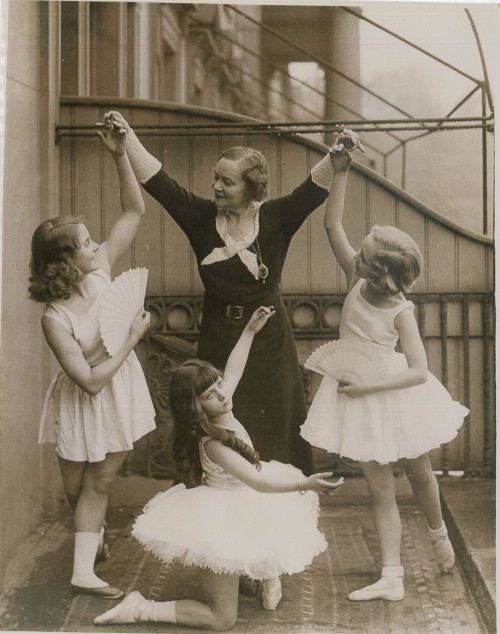
On Saturday 6th July 2019 Canterbury hosted the fourth annual Medieval Pageant and Family Trail, commemorating the pilgrimage of King Henry II (r. 1154–1189) to the city in 1174. To mark the occasion, we are highlighting the medieval records relating to the Canterbury Cathedral Priory and the city held in our collections today.

The earliest surviving Canterbury city charter, witnessed by Thomas Becket as Chancellor of England and sealed by King Henry II, dated c. 1155 (CCA-CC-A/A/1)

Anglo-Saxon Canterbury

The Cathedral records date back to the ninth century and tell the story of the Church and community in Canterbury. Some 20 Anglo-Saxon charters are the oldest possessions of the Cathedral, predating the Norman Conquest of 1066 and any of the buildings standing today. These charters concern properties in Kent and across south-eastern England, containing unique evidence of the medieval history, topography and language of the area. A fine example from the collection is the so-called Godwine Charter, composed in c. 1020 (CCA-DCc/ChAnt/S/458).

Written in Old English, the charter details the sale of a swine pasture at Southernden (Swithraedingdaenne) by a certain Godwine to Leofwine the Red and is witnessed by Lyfing, Archbishop of Canterbury and others. This charter was the upper-half of a ‘chirograph’, a legal document written out twice on a parchment sheet with the word +CYROGRAPHUM+ between the text copies and cut through. This meant that both parties could have a copy, and the authority of the agreement could be proven at any time by matching the two record halves.

The Godwine Charter is a fine example of an Anglo-Saxon chirograph, dated c. 1020 (CCA-DCc/ChAnt/S/458)

Lives of the Saints

As well as charters, the medieval Cathedral Priory (Christ Church) produced and housed a rich collection of illuminated manuscripts. The pre-Reformation Cathedral held over 6,000 manuscript books in its collections, more than any other medieval institution in England. In the late eleventh and twelfth centuries, the Cathedral’s own scriptorium wrote and decorated works in the Romanesque style of art, including a multi-volume Passionale (Lives of Saints). Originally seven volumes, in the 1570s and 1580s following the Dissolution the Passionale was dismembered for use as binding waste and covers for church court proceedings.

Depiction of the martyrdom of St Vincent, from a twelfth-century Passionale (CCA-DCc/LitMs/E/42, f. 9r)

The remains of the Passionale survive today across several collections, with 60 leaves remaining in Canterbury (CCA-DCc/LitMs/E/42). The surviving leaves are an outstanding example of Romanesque art, featuring elements such as narrative decoration. The narrative of the text is placed within the body of the initial of the opening word, at the beginning of texts. This can be seen at the beginning of the life of the Spanish martyr St Vincent (d. 304). The initial ‘P’ contains a depiction of St Vincent’s death, being flayed by his pagan persecutors. The animated figures and bright array of colours capture the viewer’s attention, as well as the intricate foliate interlacing and animal forms.

A Site of Pilgrimage

Canterbury became a major centre of pilgrimage in the later twelfth century after the martyrdom of Archbishop Thomas Becket. He was murdered in the Cathedral on 29 December 1170, by four knights from the court of Henry II. Becket was canonised three years later, and pilgrims flocked to his shrine to pray for miracles and cures for ailments. Visitors to the city stayed in inns and hospitals, charitable institutions that offered shelter, food, spiritual and physical care. One such institution was the Hospital of St Thomas the Martyr, Eastbridge, founded in the late twelfth century.

Grant by the widow Avicia to the Eastbridge Hospital, dated c. 1200 (CCA-U24/4/A/12)

The Eastbridge Hospital received grants and donations from the Cathedral Priory and wealthy members of the city. One charter dated c. 1200 is a grant from a widow named Avicia to Eastbridge of property in Jewry Lane, All Saints’ parish. The grant includes Avicia’s seal. Such charters provide useful evidence for the role of medieval women in Canterbury, and the city’s strong Jewish community during this time. Open to the public today to visit, Eastbridge recently featured in the ‘Plantagenet Canterbury’ episode of Britain’s Most Historic Towns shown on Channel 4 and presented by Professor Alice Roberts of the University of Birmingham.

The Canterbury Magna Carta

The dispute between Church and Crown continued into the thirteenth century, culminating in the issuing of Magna Carta (a Latin term meaning Great Charter) in 1215. Sealed by King John at Runnymede, Magna Carta made the King subject to the law, protected the rights of freemen and established the freedom of the Church in England. There are four known surviving copies of the 1215 Magna Carta today, including one charter held in the British Library that has been identified as Canterbury Cathedral’s copy of the Great Charter (London, British Library, Cotton Charter XIII 31A). Professor David Carpenter of King’s College, London uncovered the connection between Canterbury and the charter as part of the Magna Carta project that concluded in 2015, the 800th anniversary of the charter’s issue.

The opening of the transcription copy of the 1215 Canterbury Magna Carta, dated 1290s (CCA-DCc/Register/E, ff. 46v-48v)

Professor Carpenter studied the text of a transcription made in the 1290s of the 1215 Magna Carta held at the Cathedral (DCc/Register/E, ff. 46v-48v), revealing unique readings of the text only present in the British Library charter. This exciting rediscovery confirms the survival of the Canterbury copy of the Great Charter, and strengthens the links between the Cathedral and the story of Magna Carta. Furthermore, Stephen Langton, Archbishop of Canterbury, was chief negotiator between the King and barons during the meetings at Runnymede in 1215, and probably involved in drafting the text of the charter. In 2016, the pre-Reformation archive of the Cathedral was added to the UNESCO UK Memory of the World Register, thus gaining recognition as one of the most important collections of its type.

For more information on the Medieval Pageant and Family Trail on 6 July 2019, see the webpage for more information:  https://www.canterburybid.co.uk/canterbury-medieval-pageant/

Discover more about collections on the Canterbury Cathedral webpage: https://www.canterbury-Cathedral.org/heritage/archives-library/

Alison Ray, Assistant Archivist
Canterbury Cathedral Archives and Library

Related:

Records of the Dean and Chapter of Canterbury Cathedral, c800 – [ongoing]

All Canterbury Cathedral Archives collections on the Archives Hub.

Previous features on Canterbury Cathedral Archives Collections:

Heavenly Harmony: Music in the Collections of Canterbury Cathedral Archives and Library

 All images copyright of the Chapter of Canterbury and reproduced with the kind permission of the copyright holders.

“Gather them in” – the musical treasures of W.T. Freemantle

Archives Hub feature for February 2019
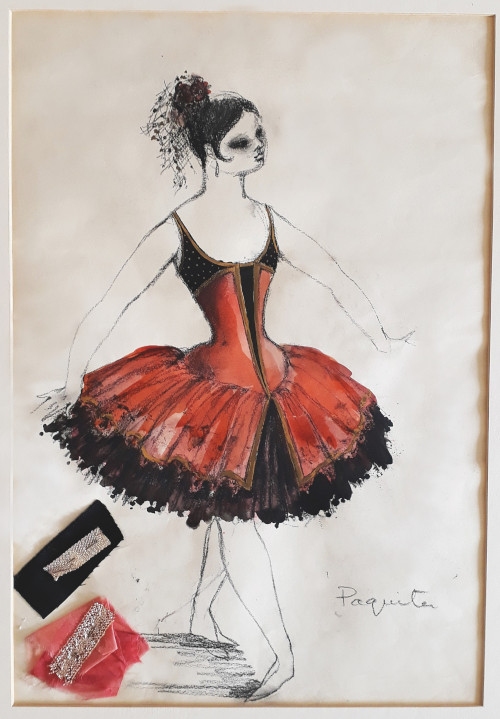
A new exhibition at the Treasures of the Brotherton Gallery at the University of Leeds explores the story of a forgotten Yorkshireman whose achievements are now being reassessed.

Dr Bryan White, Senior Lecturer in the School of Music at the University of Leeds, has been researching the material collected by the Sheffield-based organist, antiquarian and collector William Thomas Freemantle (1849-1931). Dr White’s investigations have revealed a tenacious collector who would “endure martyrdom in Siberia” to acquire unique treasures for his library.

Photograph of W.T. Freemantle, 1912. Leeds University Library, Special Collections, MS 1700/6/7.

W.T. Freemantle’s musical interests extended widely and he gathered a valuable collection of manuscripts and prints. Much of this material has only recently been catalogued, and more still remains to be explored.

“W.T.” was born in Chichester and moved with his family to Sheffield in 1855. At the age of 16 he was apprenticed organist at Lincoln Cathedral and developed an interest in the music of Felix Mendelssohn (1809-1847).

Engraving of Felix Mendelssohn Bartholdy made by A.H. Payne and W.C. Wrankmore, after a portrait by Theodore Hildebrand (c.1835). Leeds University Library, Special Collections, Brotherton Collection, uncatalogued holdings.

Freemantle’s enthusiasm for Mendelssohn ran against the tide. At the mid-point of the nineteenth century the composer was a towering figure in the musical landscape, particularly in Britain. Mendelssohn’s reputation waned in subsequent decades, but Freemantle continued to value his music highly. Today Mendelssohn is again one of the most popular Romantic composers, and Freemantle’s collection has much to offer the researcher.

Freemantle described his metamorphosis into a collector in a lecture entitled “How I became an autograph collector and what I have got”. He tells of a visit to a Sheffield market where he stumbled upon a “rather soiled looking lot of manuscript music”. As he worked through the pile he found a Mendelssohn signature and felt “my blood had heated, my pulse had quickened” … “Oh! That bundle of music! I was now indeed an autograph collector.”

Autograph manuscript of Mendelssohn’s “Sonata” in B flat minor, 1823. This is the only source for this early sonata. Leeds University Library, Special Collections, BC MS Mendelssohn/Scores 1.

Several decades later his Mendelssohn collection encompassed 40 autograph manuscript scores, 300 letters, and hundreds of books, musical prints, concert programmes and other ephemera touching upon all aspects of the composer’s life and that of his family and colleagues. In the 1870s Freemantle began a biography of the composer, but eventually put the project aside when the extent of the surviving material overwhelmed him.

Engraving of Fanny Mendelssohn and her husband Wilhelm Hensel (August Weger and Johann-Paul Singer, 1846). Leeds University Library, Special Collections, Brotherton Collection, uncatalogued holdings.

Freemantle collected music by other significant figures, and in particular committed himself to the music of Charles Dibdin (1745-1814), a prolific composer of theatre music and songs. Freemantle acquired a substantial set of Dibdin’s autograph manuscripts, working with great skill and dedication to organise and identify this very disordered material.

Charles Dibdin, autograph sketches of “Here’s all her gear” from his comic opera Rose and Colin, 1778. Leeds University Library, Special Collections, MS 1700/2/38.

W.T. also took a strong interest in Sheffield history. He acquired books, pottery, painting, prints and tokens from the local area and wrote and lectured on local history. His collection of Rockingham pottery was eventually bought by the Sheffield Corporation and now resides at Weston Park Museum along with his collection of coins and seals.

Freemantle sold his Mendelssohn collection along with his entire library to Lord Brotherton of Wakefield sometime in 1927-28. The purchase was probably brokered by Brotherton’s personal librarian, J. Alexander Symington (1887-1961). Symington had oversight of the Freemantle Collection before it was formally accessioned by the University Library in Leeds, and he took the opportunity to sell significant parts of the Mendelssohn and Dibdin material to libraries and collectors in the United States. His actions played a significant role in suppressing the extent of Freemantle’s activities and his reputation as a collector.

Photograph of W.T. Freemantle and family at Barbot Hall, 1913. Leeds University Library, Special Collections, Brotherton Collection, uncatalogued holdings.

Had Freemantle’s music collections remained intact he would be recognised as a pioneering figure in Mendelssohn studies, and more widely as a significant British collector of his era. Thankfully, the rest of Freemantle’s materials were left untouched and now form an important part of Special Collections at the University of Leeds. Now that Freemantle’s work is being reassessed, the real story of his achievements can begin to be told!

The exhibition runs from 1 March-31 July 2019 in the Treasures of the Brotherton Gallery at the University of Leeds.

On show for the first time to the general public are many of the Mendelssohn manuscript scores housed in Special Collections at Leeds University Library, alongside other items from Freemantle’s extensive music collections.

The Treasures of the Brotherton Gallery is free and open to all. For directions, opening times and our programme of related events see:

https://library.leeds.ac.uk/galleries

Get all the latest news and behind the scenes insights by following the Gallery on Facebook, Instagram and Twitter – @LULGalleries

Special Collections at Leeds University Library is home to hundreds of thousands of rare books, manuscripts, archives and artworks. Our collections offer a rich resource for staff, students, and the wider research community. Start your search here:

https://library.leeds.ac.uk/special-collections

Dr Bryan White
Senior Lecturer, School of Music, University of Leeds

Rhiannon Lawrence-Francis
Collections and Engagement Manager, Special Collections, University of Leeds

Related

Miscellaneous papers collected by W.T. Freemantle, ca.1775-ca.1925

Browse all University of Leeds Special Collections descriptions on the Archives Hub.

The Mendelssohn papers, mid-18th-19th century (held by the Bodleian Library, University of Oxford)

Previous features on the University of Leeds Special Collections:

Sentimental Journey: a focus on travel in the archives

Recipes through the ages 

World War One

All images copyright University of Leeds Special Collections and reproduced with the kind permission of the copyright holders.

Uncovering censorship in the V and A Theatre and Performance Archives

Archives Hub feature for September 2018
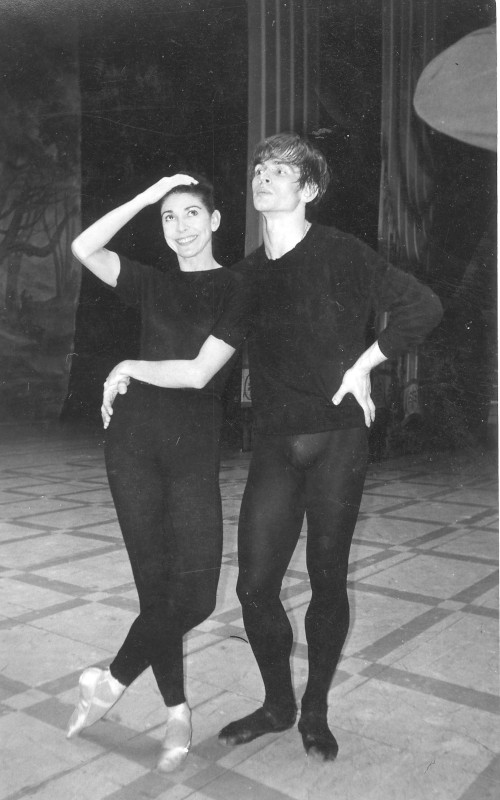
On the 9th July 2018, the V&A Theatre and Performance Department opened a new display in our galleries titled Censored! Stage, Screen, Society at 50The display commemorates the 50th anniversary of the Theatres Act, which abolished state censorship of the British stage. As well as tracing the broader 300-year history of stage censorship, the display also looks at the censorship of music, film and print in the UK.

Uniquely for one of our displays, much of the material is taken from our collection of almost 500 named archives that form the V&A Theatre & Performance Archives. A significant portion of these are catalogued on the Archives Hub website, and all can be consulted by appointment in our Reading Room at Blythe House in London.
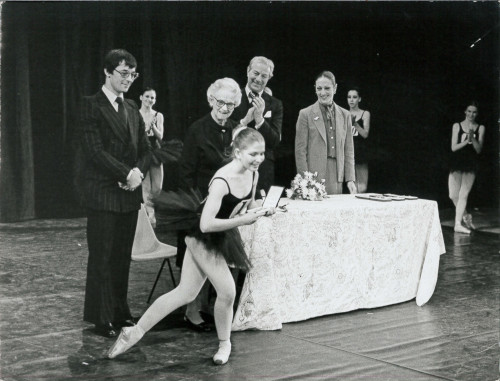
Poster for The Arts & Censorship gala at the Royal Festival Hall, 1968.
Poster for The Arts & Censorship gala at the Royal Festival Hall, 1968.                              Image copyright: © Victoria and Albert Museum, London [Museum no. S.2054-1995].
Telling a story of censorship

Censorship is a story shaped by legal documents and correspondence. Its battles were often fought on paper and were won and lost through Parliamentary Acts.

Patent for Theatre Royal Drury Lane, issued by Charles II to Thomas Killigrew, 1662.
Patent for Theatre Royal Drury Lane, issued by Charles II to Thomas Killigrew, 1662. Credit: On loan from the Really Useful Theatres Group. Image copyright: © Victoria and Albert Museum, courtesy of Really Useful Theatres [Museum no. LOAN:USEFUL.1-2000].
This meant that the core of the display had to be taken from the rich resource of company, theatre and individual archives which are comprised of these letters, licenses and administrative records.

Curatorially, we considered the challenges of presenting archives carefully:

  • We wished to avoid overwhelming the visitor with paperwork;
  • To select key documents which could communicate both a specific example and the overarching narrative of censorship;
  • Balance a paper-driven aesthetic with colour and innovative exhibition design

We carried out rigorous research, and found fantastic theatre designs, posters and photographs which equally contributed to the narrative of the display. We were also lucky to work with political cartoonist Gerald Scarfe, who created a special commission for the display, as well as leading graphic designers Barnbrook who conceived the display design concept.

Censored! Stage, Screen, Society at 50 display, Theatre and Performance Galleries, Copyright V&A Images.

There were obvious important examples of censorship that we wanted to include, such as the play Saved by Edward Bond. This was performed as a private ‘club performance’ at the Royal Court Theatre after it was banned by the Lord Chamberlain for its violence and profanity.
In the English Stage Company / Royal Court Archive, it was fantastic to find correspondence from Edward Bond to the Lord Chamberlain refusing to make alterations, as well as a handwritten note written by a theatre staff member recording a conversation with a police officer who came to investigate the illicit performances.

Lord Chamberlain’s alterations to Saved by Edward Bond, 1965.
Lord Chamberlain’s alterations to Saved by Edward Bond, 1965.  Image copyright: © Victoria and Albert Museum, London [Archive ref: THM/273].
There were also surprising discoveries within named archives. Joan Littlewood of Theatre Workshop had directed a semi-improvised play You Won’t Always Be On Top in 1958. She was prosecuted for producing a show which did not have a script for inspection by the Lord Chamberlain.

We discovered a letter in the Vivien Leigh Archive which Littlewood had written to the actress to ask for her public support. Leigh and husband Laurence Olivier were vocal supporters of the removal of censorship, and Littlewood was successfully defended in court. As well as this letter, we were also generously allowed to display photographs of the production from the Theatre Royal Stratford East Archive.

Letter from Joan Littlewood to Vivien Leigh, 1958.
Letter from Joan Littlewood to Vivien Leigh, 1958.  Image copyright: © Victoria and Albert Museum, London [Archive ref: THM/433].
The display also features a section on OZ magazine, which was the subject of a notorious obscenity trial in 1971 for the publication of its Schoolkids Issue. This was edited by children and featured a depiction of Rupert the Bear in a sexually explicit scenario. The successful defence of the magazine’s editors was a ground-breaking testament of an increasingly liberalised culture.

The acquisition of the Felix Dennis / OZ magazine archive in 2017, with the assistance of the Art Fund, provided with us with fascinating material for display. Not only tracing the creative process, including paste-up boards by Martin Sharp, the archive also contains a wealth of material relating to the trial and the magazine editors’ supporters, including flyers for benefit concerts, badges and a fundraising record by John Lennon and Yoko Ono.

‘God Save Oz’ charity record by Apple Records, 1971.
‘God Save Oz’ charity record by Apple Records, 1971.  Image copyright: © Victoria and Albert Museum, London [Archive ref: THM/497].
As well as these examples, we also drew material from our core collection of Production Files, and images from our extensive photographic collections, including the Douglas Jeffery Archive. The Arts Council of Great Britain Archive also provided valuable documents relating to recent productions that had been the target of protest or loss of funding.

Production photograph of The Romans in Britain, National Theatre, 1980.
Production photograph of The Romans in Britain, National Theatre, 1980.            Credit: Douglas Jeffery. Image copyright: © Victoria and Albert Museum [Archive ref: THM/374/1/2283/5].
This a small selection of the fascinating stories uncovered in the archives and now on display. Visit in person to listen to a playlist of banned songs, hear interviews from leading practitioners and cultural critics, and contribute towards the debate ‘what is censorship?’.

Censored! Stage, Screen, Society at 50 is open until 27th January 2019.

Harriet Reed, Assistant Curator
V&A Theatre and Performance Department
Victoria & Albert Museum

Browse all V&A Theatre and Performance Archives collections on the Archives Hub.

Previous features by V&A Theatre and Performance Archives:

The D’Oyly Carte Archive, October 2016

Curtain up! The Theatre and Performance Collections at the V&A, 2011

All images copyright the Victoria and Albert Museum and reproduced with the kind permission of the copyright holders.