This blog post forms part of History Day 2024, a day of online interactive events for students, researchers and history enthusiasts to explore library, museum, archive and history collections across the UK and beyond.
Use Archives Hub, a free resource provided by Jisc, to find unique sources for your research, both physical and digital. Search across over 3.3 million descriptions of archives, held at over 390 institutions and organisations across the UK.
As History Day takes place during November, let’s explore some archival collections around the theme of ‘Autumn’!
Abundant harvests
International Harvester Company of Great Britain International Harvester Company was formed by a merger in 1902 between two of the largest American manufacturers of harvesting machinery, McCormick and Deering Harvester Company. Three other firms joined the merger: Milwaukee Harvester Company, Plano Manufacturing Company and Warder, Bushnell and Glasner. This new corporation became the world’s dominant manufacturer of a wide range of agricultural implements and machines. The subsidiary company, International Harvester Company of Great Britain Limited, was incorporated in 1906 with offices located at 115 Southwark Street, London. 190 documents, 1908-1960’s. Held by the Museum of English Rural Life.
Papers on Brewing in Scotland: Brewing has been carried out in Scotland since pre-Roman times when the inhabitants of the country brewed crude ales from wild barley and rowan, spruce, broom and heather. The process was re-introduced from the Continent in the twelfth century by monks in the abbeys of Holyrood and Melrose and elsewhere. By the fifteenth century domestic brewing was widespread, seasonal, and based around the harvest cycle. Circa 13 letters, 1 manuscript volume, 19th Century-20th Century. Held by Edinburgh University Library Heritage Collections.
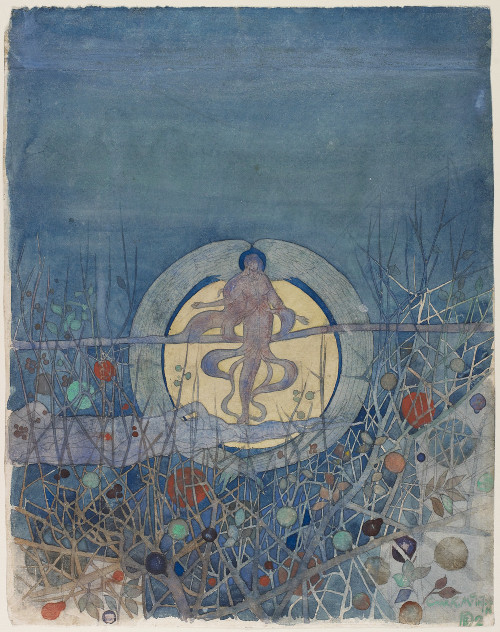
A.H. Swinton: The Sun and the Harvest: Newspaper cuttings, statistics and diagrams illustrating sunspots and their relation to the harvest, 1906-1912, and a copy of a letter from Sir Norman Lockyer to Swinton, 8 May 1901. Held by Cambridge University Library.
Falling leaves and dewy mornings
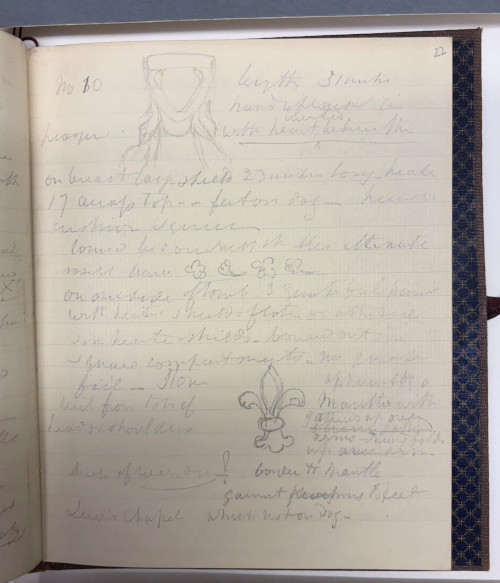
Herbert Beerbohm Tree and Family Collection: Herbert Beerbohm Tree was a successful actor manager, renowned for his productions of Shakespeare, while also keeping an eye of innovations in the field. He made his amateur debut as an actor in 1876, and turned professional in 1878. As well as running several theatres, he undertook many foreign tours and made a name for himself in America as well as in Britain. He founded the Academy of Dramatic Art (later to become RADA) in 1904, and was knighted in 1909. In 1882 he married Helen Maud Holt, professionally known as Mrs Beerbohm Tree and later Lady Tree, an actress who frequently was to appear on stage with him. His daughter Viola was also an actress. Held by V&A Theatre and Performance Collections.
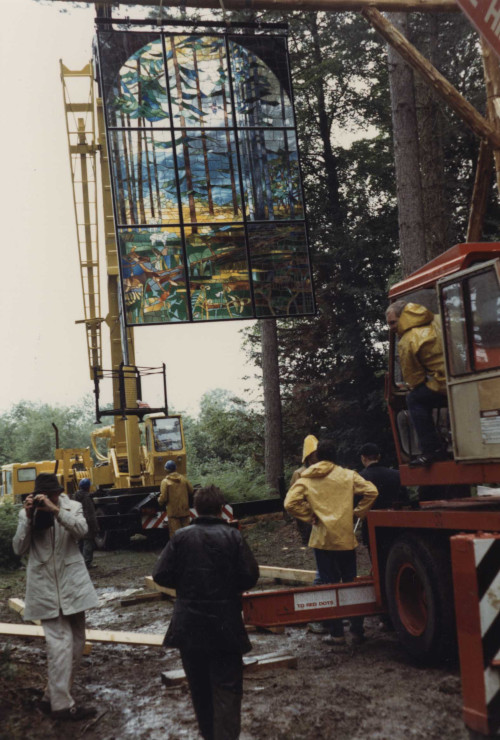
Maple Leaves: Canadian History and Quebec Scenery (Third Series): Sir James McPherson LeMoine was a prolific writer, chiefly on historical subjects, whose books include seven volumes, published between 1863 and 1906, entitled ‘Maple Leaves’. The third in a seven-volume series, this volume contains material in two main categories; historical essays, chiefly on the campaign of 1759, and thirty-five short accounts of ‘Our Country Seats’, in the vicinity of Quebec. It was the first Canadian book illustrated by the insertion of actual photographs, and, according to Greenhill (1965) p.64, ‘Copies of this book differ very considerably both in the number of photographs included and in the actual pictures used’. Held by the Royal Commonwealth Society Library.
Papers of the Missionary Leaves Association: The Missionary Leaves Association [MLA] was founded in 1869 by Reverend R. C. Billing and Mrs. H. G. Malaher of Reading, Miss Lanfear of Hungerford and other friends. Mr. Malaher was its first secretary and its headquarters were at 20 Compton Terrace, London. The purpose of the Association was to assist Church Missionary Society missionaries and indigenous clergy in the CMS mission areas, by providing an agency through which they could obtain things necessary for their work but not provided by CMS e.g. harmoniums, equipment for lantern shows, church furniture and bells etc. It also collected contributions for the support of orphans and children in boarding-schools. It supplied goods for sale to people in the British Isles who organised fundraising events for CMS. Held by the Cadbury Research Library at the University of Birmingham.

Papers William Dew & Sons: The firm of William Dew & Sons, auctioneers, valuers and surveyors was based at Bangor and Conwy in north Wales. The collection (54 items, 1848-1906) comprises correspondence and other material relating to properties, businesses and land across North Wales, including Bangor and Llanberis Railway; Hafod Las Quarry; Caernarfon; Kinmel Manor; Anglesey Castle; Plas Newydd Estate. Held by Archifdy Prifysgol Bangor / Bangor University Archives.
Deeds collected by G.J. Dew: George James Dew (1846-1928) lived in Lower Heyford, Oxfordshire. Some of his diaries relating to village life, and the poor law, have been published. The deeds comprise: an account of the sum charged on each parish in Ploughley Hundred, Oxfordshire, for the land tax of 1772; articles of agreement touching the debts of Henry Villiers of St. Martin in the fields, London, deceased; tolls from a lighthouse at Tynemouth, Northumberland, 1714; a financial settlement by the Earl of Jersey, 1711; two King’s Bench summonses, 1773. Held by Bodleian Library, University of Oxford.
National Meteorological Archive: The National Meteorological Archive is home to one of the most comprehensive collections on meteorology anywhere in the world and provides a major resource for scientific and historical research of international scope. The collection contains around 500,000 meteorological records stored across four large, environmentally controlled strongrooms. Records in English and multiple languages, Mid-Nineteenth century – 2010. Held by the National Meteorological Archive.
Bonfires and fireworks
Madame Tussaud’s: Guy Fawkes 1977-1978: File relating to the design of the Guy Fawkes tableau designed by Julia Trevelyan Oman for Madame Tussaud’s. Contains costume designs, fabric swatches and reference material, designs for props and scenery and photographs of the finished tableau. Forms part of the Julia Trevelyan Oman Archive (1930-2003). Julia Trevelyan Oman CBE (1930-2003) was one of the most celebrated theatre, television, ballet and opera designers of the second half of the twentieth century. Her personal archive covers her entire career and includes her original designs with research files, technical drawings and plans, research photographs, production photographs, correspondence and fabric swatches. Held by University of Bristol Theatre Collection.
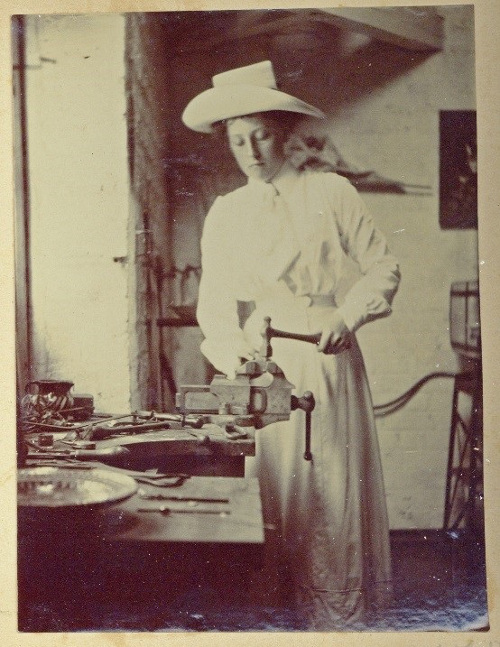
Letter from Mary Katharine Trevelyan to Florence Bell, concerning family life: Mary hosts a bonfire with fireworks which all of Cambo village all attended. Forms part of the Trevelyan (Charles Philips) Archive: In 1904 Charles married Mary Katharine Trevelyan nee Bell (1881-1966) [Molly], daughter of Hugh and Florence Bell, and half-sister of the archaeologist and explorer Gertrude Bell. The pair had seven children together, six of whom survived to adulthood. The early years of their marriage were split between Cambo House on the Wallington Estate in Northumberland, and 14 Great College Street in Westminster. Held by Newcastle University Special Collections and Archives.
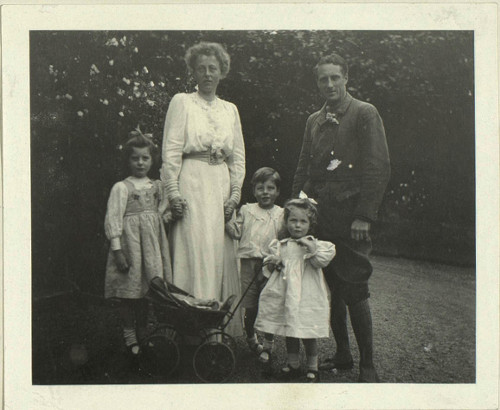
Henry Doubleday Research Association “Give up Smoking Bonfires” leaflet: ‘Give up Smoking Bonfires – make compost instead’ information leaflet. Pybus is referenced in this leaflet relating to the inhalation of smoke. The item is part of the Pybus (Professor Frederick) Archive, the professional and personal papers of Professor Frederick Charles Pybus (1882-1975). His papers primarily used statistical evidence and real-life cases to investigate the association of lung cancer and carcinogens found in air pollution – particularly benzopyrene in soot from burning materials and diesel fumes. Pybus also investigated the effects of tobacco smoking, but felt that air pollution was a bigger threat. Held by Newcastle University Special Collections and Archives.
Astra Fireworks, firework manufacturer: display poster and firework labels: Astra Fireworks, based at Sandwich, Kent, produced a wide range of British fireworks. In the 1980s the company’s output was reduced and the production ranges limited to its most popular lines of fireworks and other pyrotechnic products. The collection (1 file) comprises firework labels, including price and size details (ca. 1950-1990); promotional display poster (undated). Held by the V&A Archive of Art and Design.
To view the full list of item descriptions for the Astra Fireworks collection, select the ‘expand’ button on the table of contents – to the top right of the description (you’ll see this option for any multi-level description on Archives Hub).

Programme: Firework display to welcome the return of Queen Victoria and Prince Albert to Holyhead:
Alexandrina Victoria (1819-1901) was Queen from 20 June 1837 until her death. She was the daughter of Prince Edward, Duke of Kent and Strathearn and Princess Victoria of Saxe-Coburg-Saalfeld. She inherited the throne at the age of 18. Victoria married her first cousin, Prince Albert of Saxe-Coburg and Gotha in 1840. The Royal party passed through Holyhead enroute to Ireland. Held by Archifau Ynys Môn / Anglesey Archives.
Documents relating to Martin Beckman: Martin Beckman, pyrotechnist and military engineer, was born in Stockholm, Sweden in 1634/5. Beckman says he left Sweden in the mid 1640s to serve the English crown. He took an early interest in fireworks and was injured whilst preparing a display to celebrate the coronation of King Charles in 1661 and was granted £100 compensation by the king. Held by Hull History Centre.
- Follow us on Facebook
- Join our mailing list: to receive updates about the latest collections and contributors on Archives Hub and tips for using archives in your research – visit our jiscmail list to sign up
- How to search Archives Hub
- Read more Features
- Explore Online Resources